How to Draw an Elephant in Profile
A free step-by-step lesson in 12 steps — about 32 minutes with just a pencil, an eraser and paper. Draw the light shapes first; they get erased at the end.
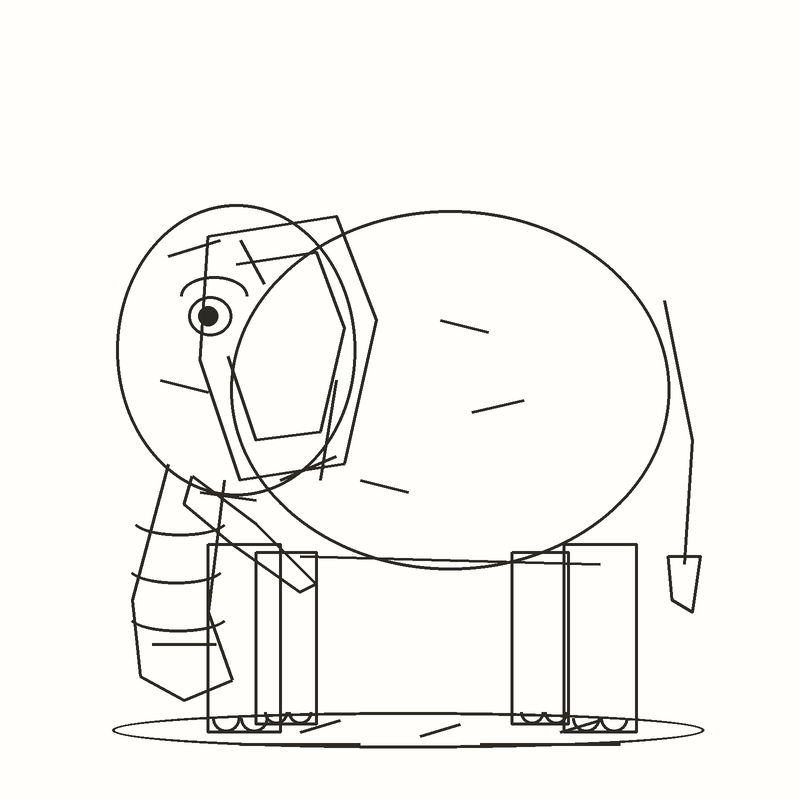
The 12 steps
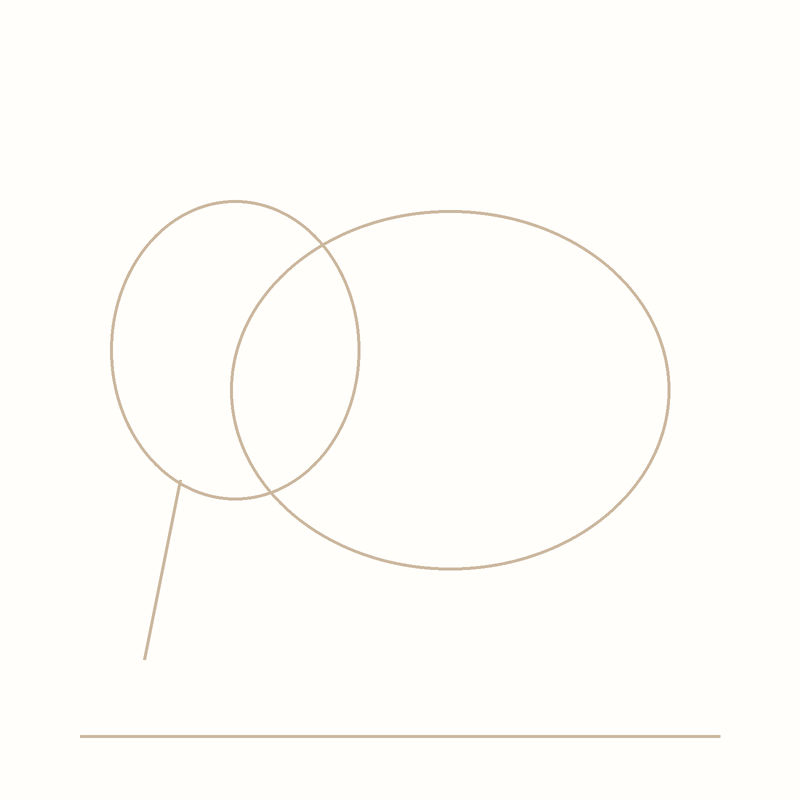
Boss lesson! Lightly block in the huge body oval, the head oval overlapping its front, the ground line, and the line the trunk will fall along.
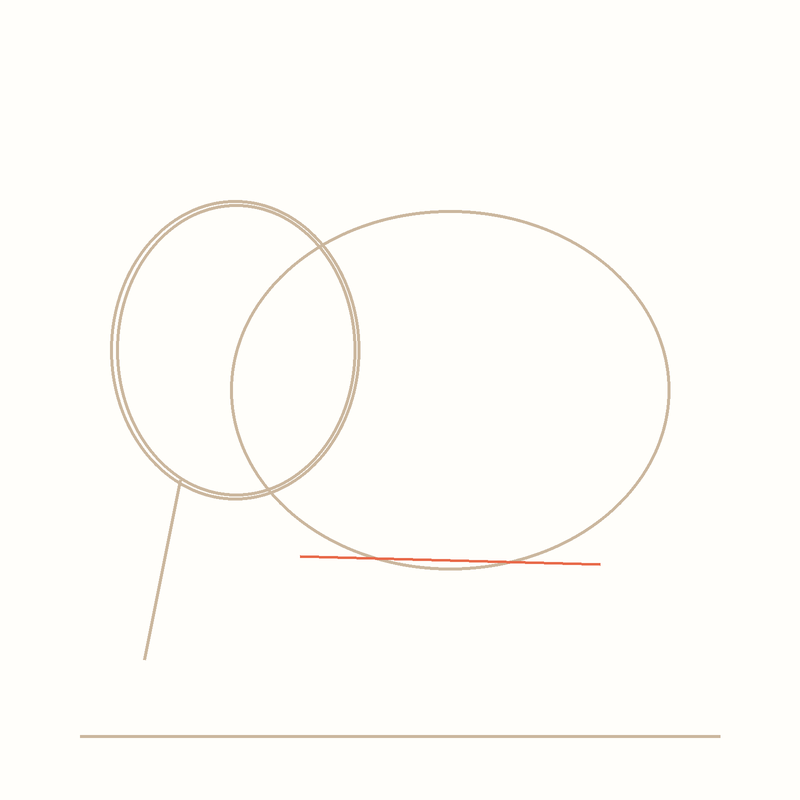
Ink the body and head as two big overlapping ovals, and run the belly line underneath to join them into one animal.
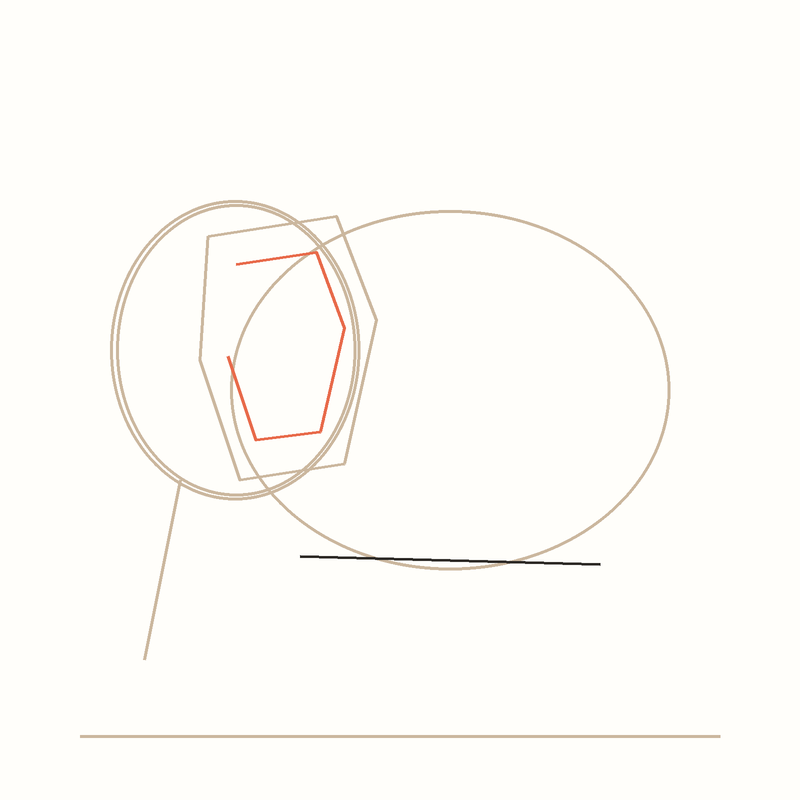
Hang the great ear over the shoulder: a big rounded flap shape, with a smaller inner-ear line following its front edge.
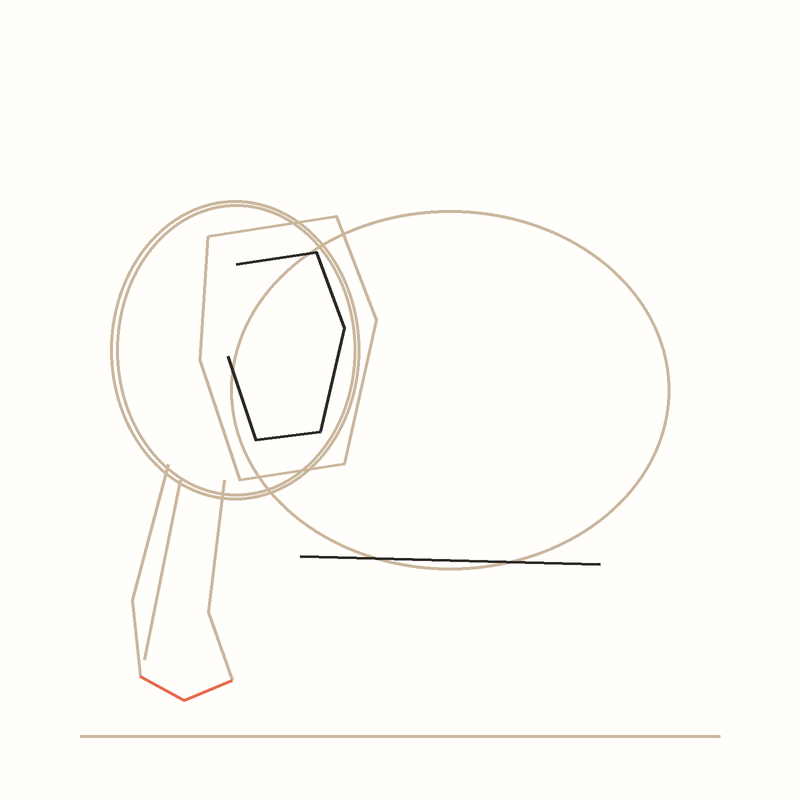
Draw the trunk falling in two long curves from the head, meeting at a slightly curled tip at the bottom.
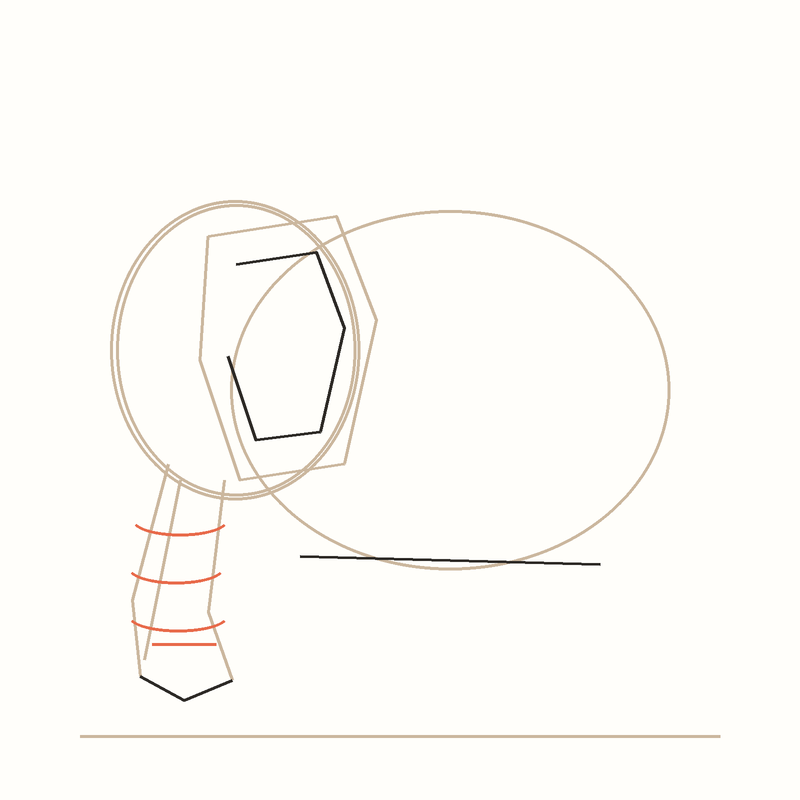
Ring the trunk with wrinkle arcs all the way down — closer together as the trunk narrows, like the rings on a hose.
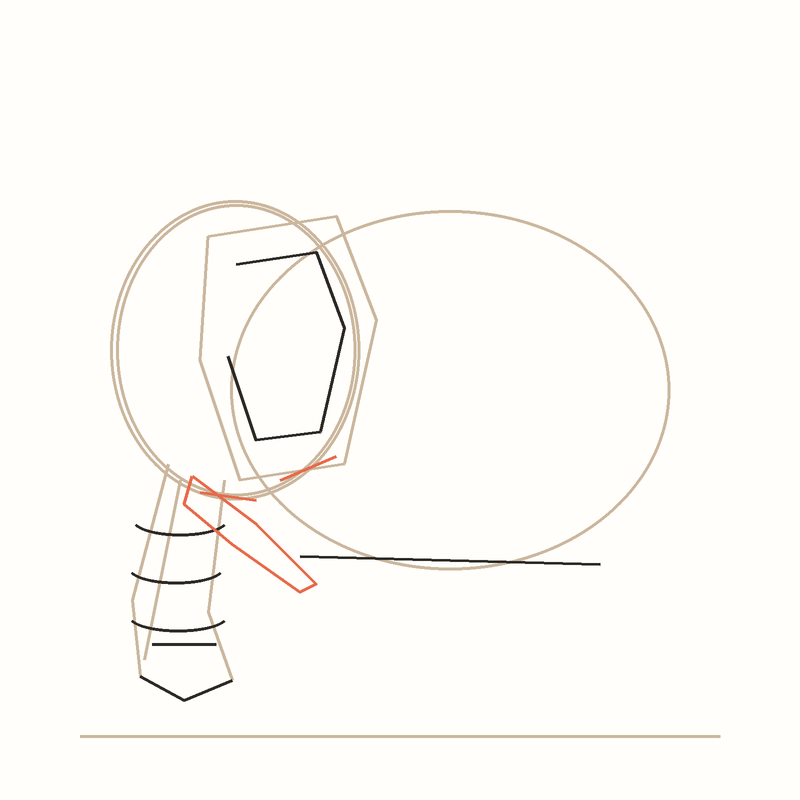
Slide the tusk out beneath the trunk base in one smooth curve to a soft point, and add the mouth line and jaw crease.
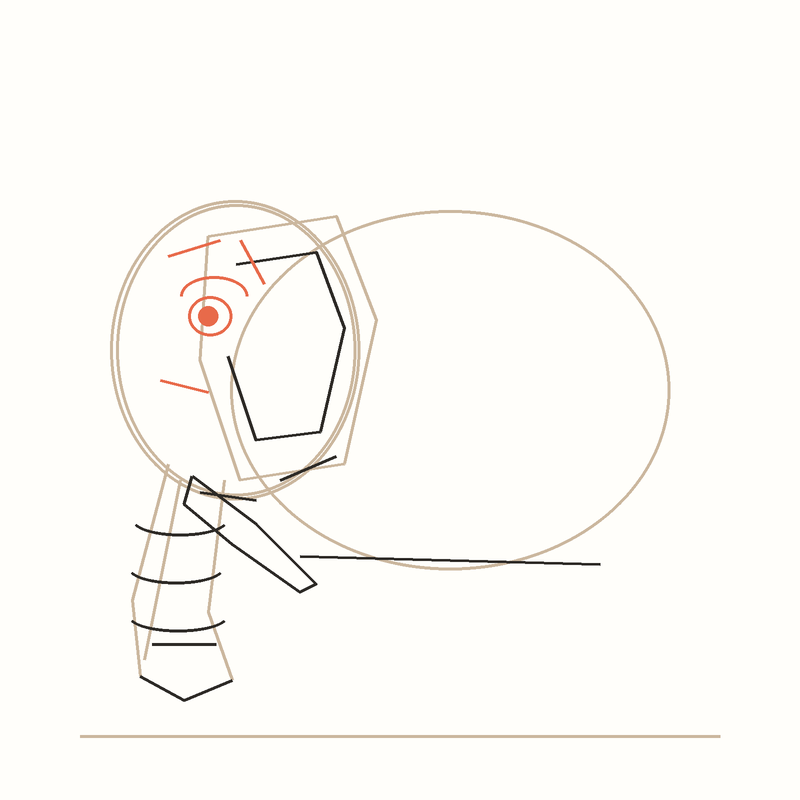
Set the small eye in its ring with a heavy brow arc above it, and crease the head with a few wrinkle strokes.
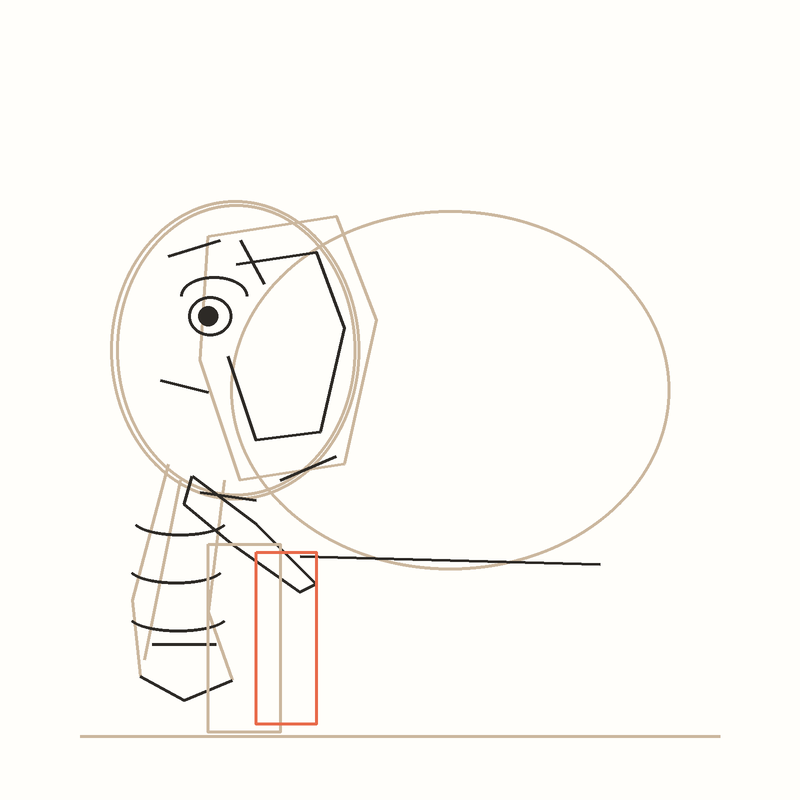
Plant the front legs: two straight columns side by side, the far leg drawn a little narrower and a step shorter.
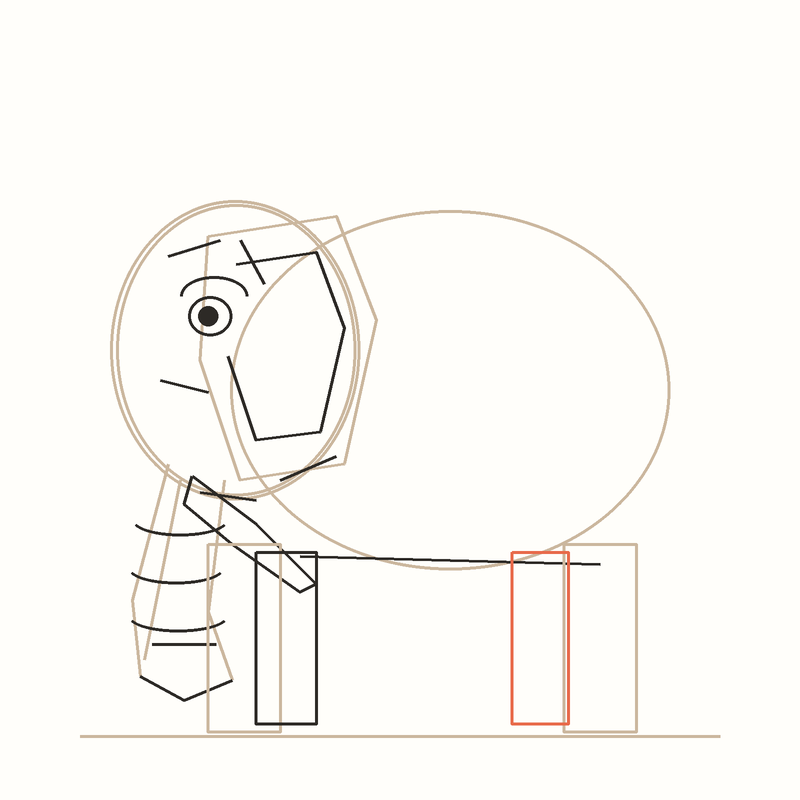
Plant the back legs the same way under the rear of the body, keeping all four columns perfectly vertical.
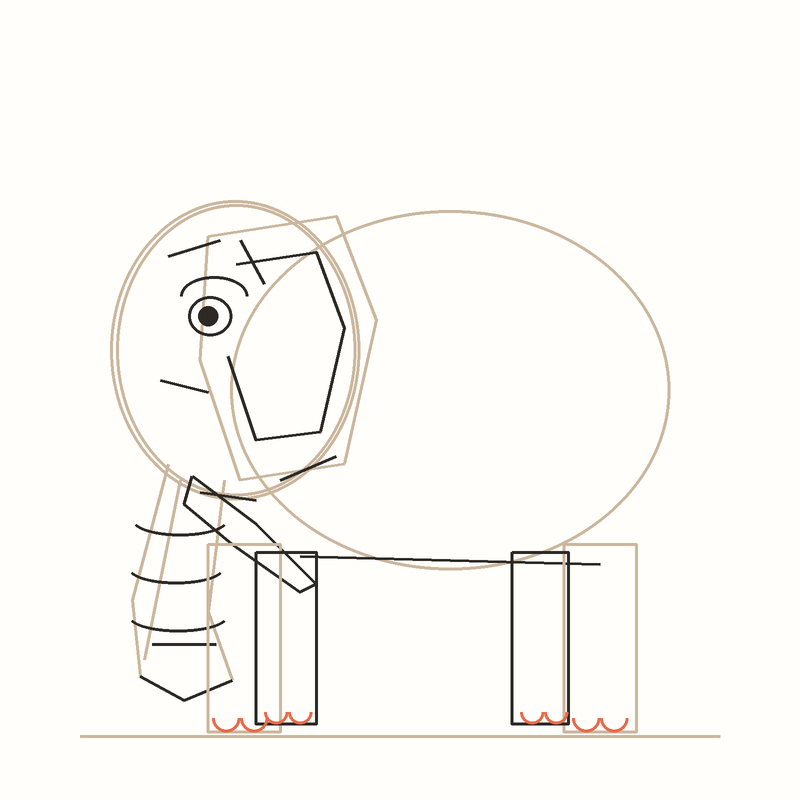
Give every foot its toenails — two little arcs across the front of each column. This tiny detail sells the whole animal.
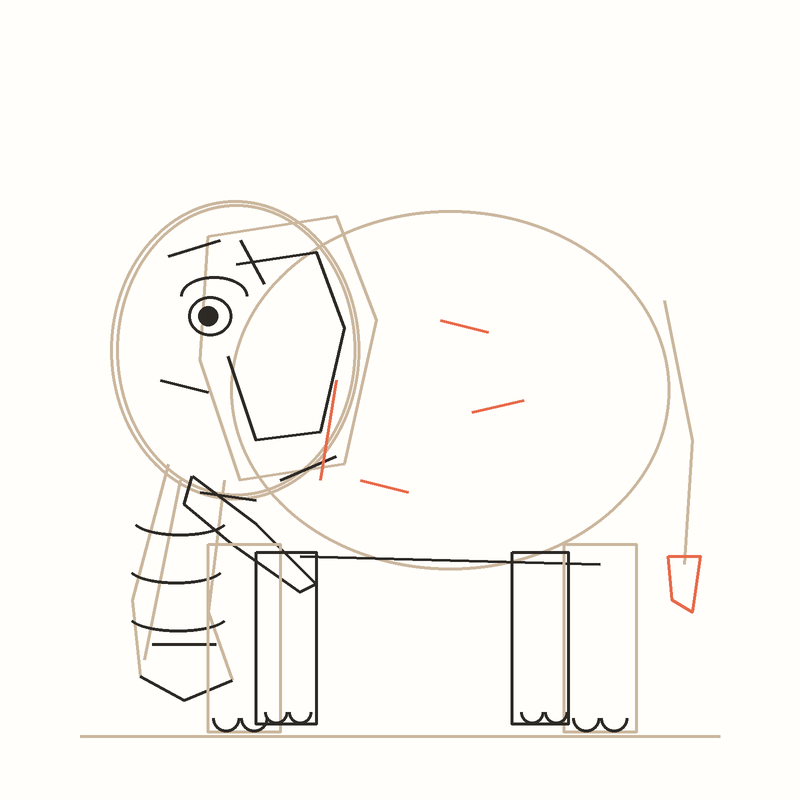
Add the thin tail with its tuft, then wrinkle the hide with short curved strokes on the body and a fold behind the ear.
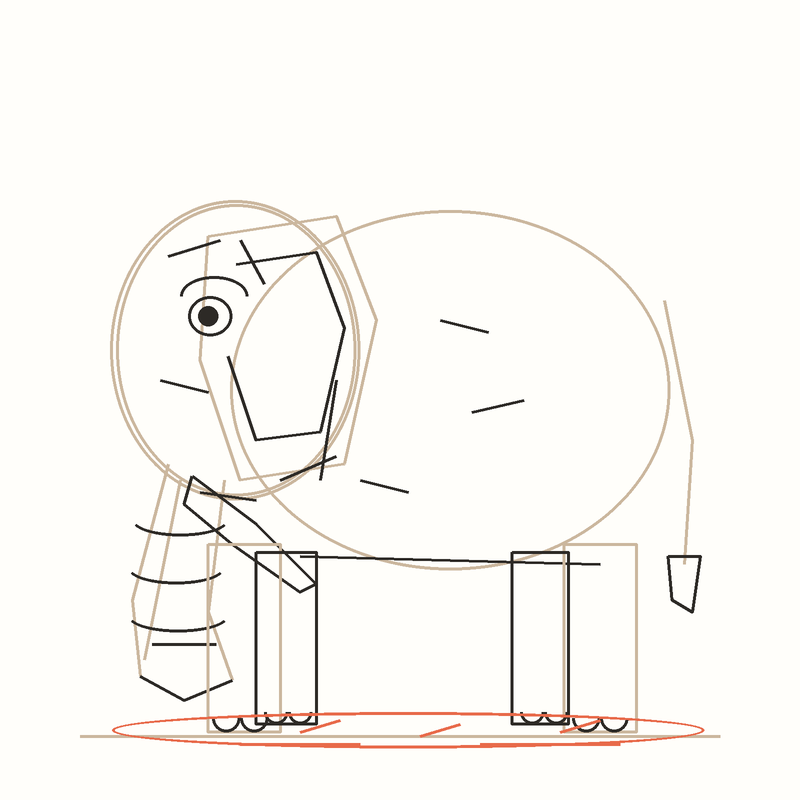
Finish with a wide ground shadow and hatching under the belly, so five tons sit convincingly on the earth. Boss complete!
Coach tips for this lesson
Before you call it done, run these three checks — they're the same ones the app asks in its Coach Check:
- Are all four legs straight vertical columns of similar width, standing on one ground line?
- Do the trunk's wrinkle rings get closer together as the trunk narrows toward the tip?
- Is the ear big enough — covering most of the shoulder — with its inner line following the front edge?
Elephant legs are pillars, not sticks: each one is nearly as wide at the ankle as at the top, dead straight, and all four feet land on the same ground line. If a leg tapers, bends, or floats, the animal loses its famous weight. Straighten the columns, equalise their widths, and drop every foot to the line.
The trunk's rings follow its taper — wide-spaced and deep near the head, crowding together near the tip, each ring curving around the trunk's roundness. Evenly spaced straight lines read as a striped tube. Curve every ring and tighten the spacing as you descend.
An African elephant's ear is enormous — it should drape from the top of the head down past the shoulder, wider than the head itself. A small ear makes the animal read as a baby or a different species. Enlarge the flap until its bottom edge passes the jaw line, and echo its front curve with the inner line.
Finish this lesson in the app
In the free Draw.guru app you can trace this lesson on screen for an instant score, or photograph your paper drawing and overlay it on the reference with Smart Compare. Join the waitlist for launch.
One launch email, that's it. No spam, unsubscribe any time.