How to Draw a Helicopter, Detailed
A free step-by-step lesson in 11 steps — about 30 minutes with just a pencil, an eraser and paper. Draw the light shapes first; they get erased at the end.
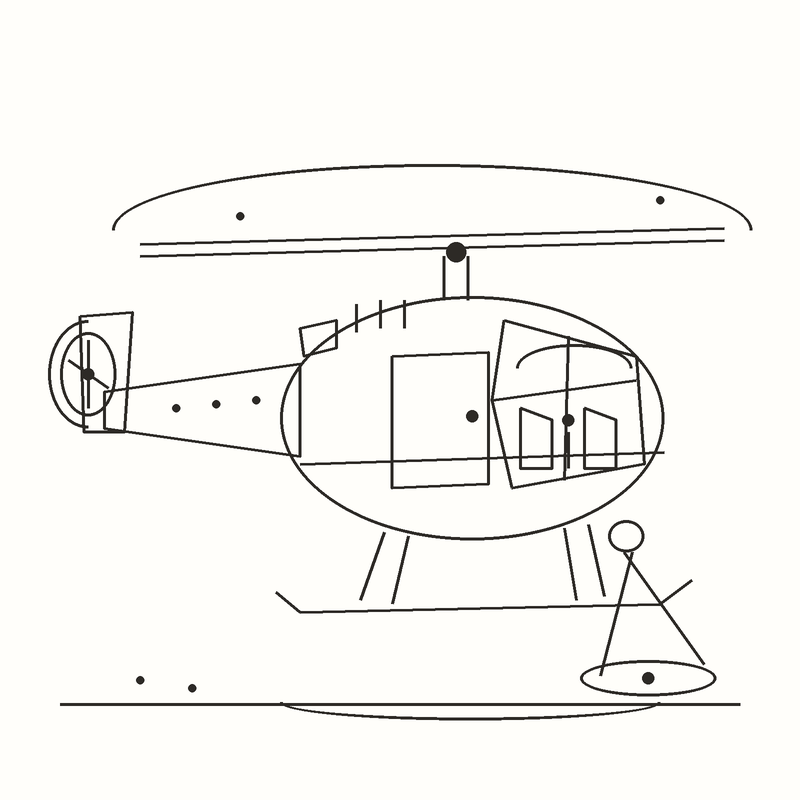
The 11 steps
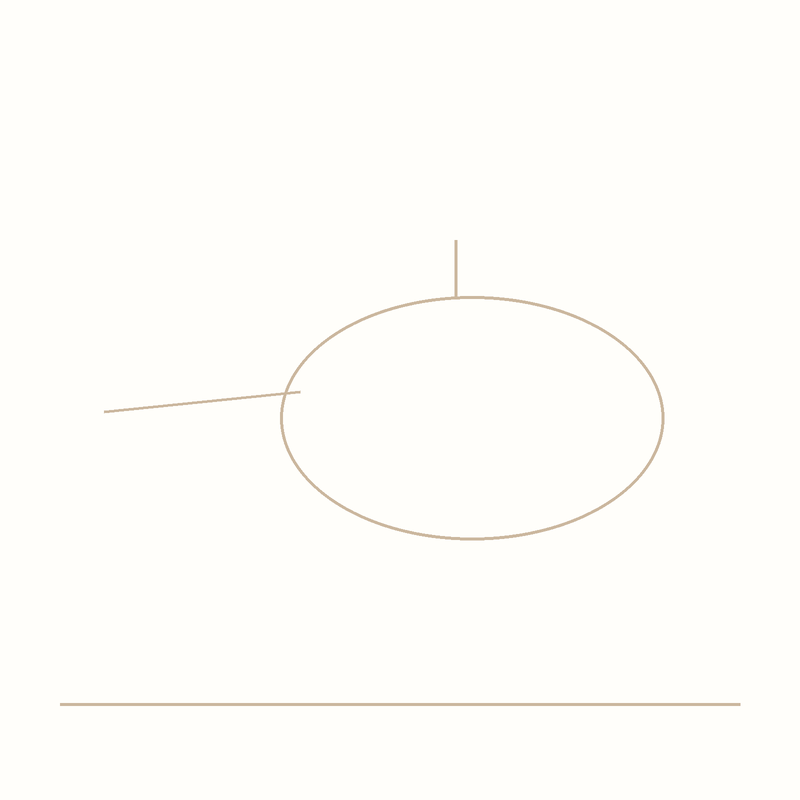
Boss lesson — a whole aircraft. Sketch the guides: the fat fuselage oval, the tail boom running off to the left, the rotor mast, and the ground it will hover over.
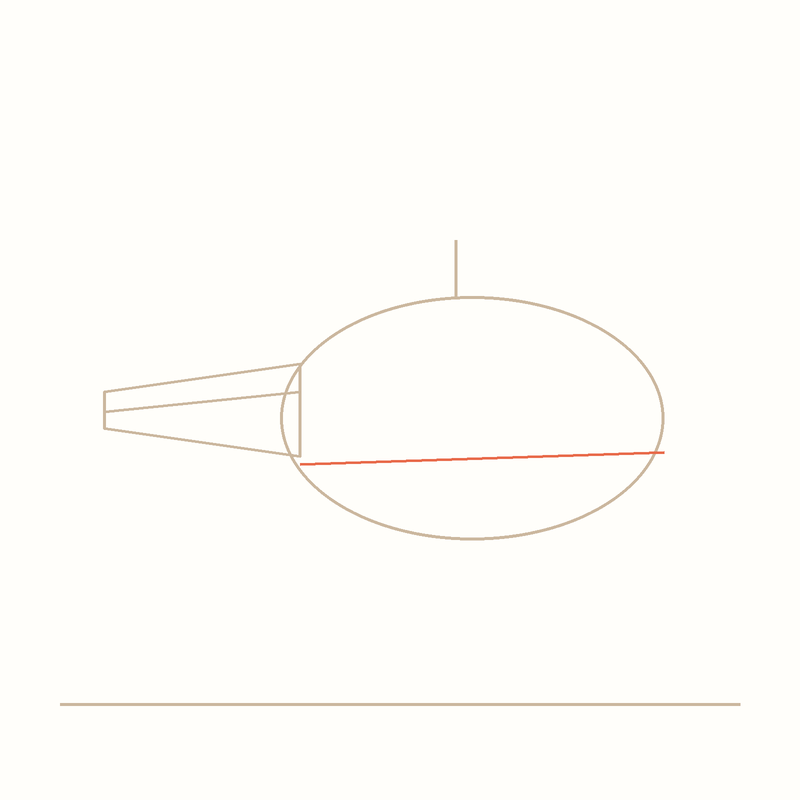
Ink the fuselage and stretch the tail boom out of its back, tapering as it goes, with the belly stripe running the body's length.
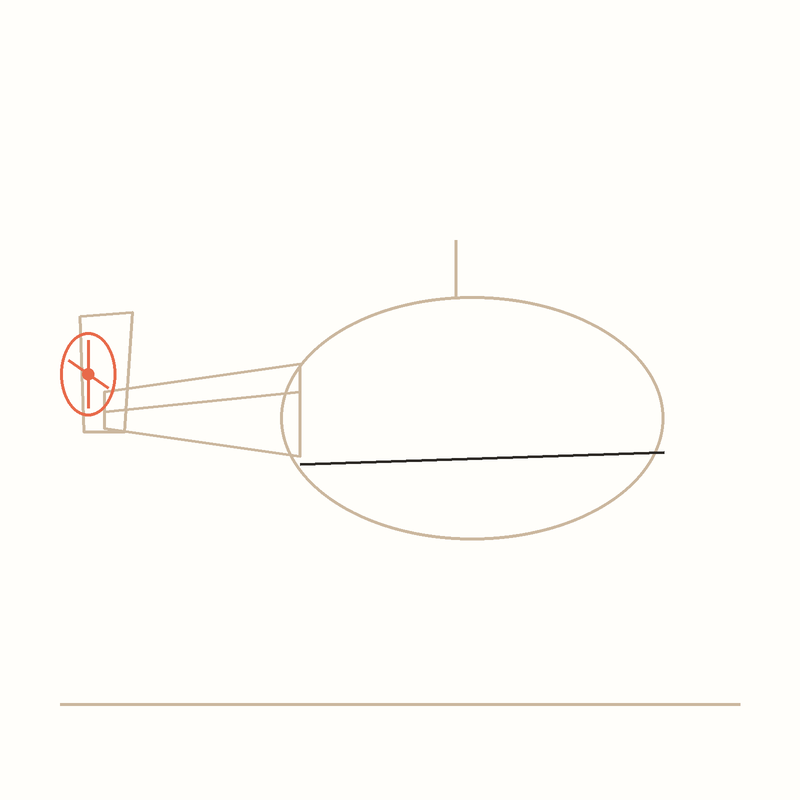
Cap the boom with the tail fin and the little tail rotor — blades, cross and hub. That small rotor is what stops the whole machine spinning.
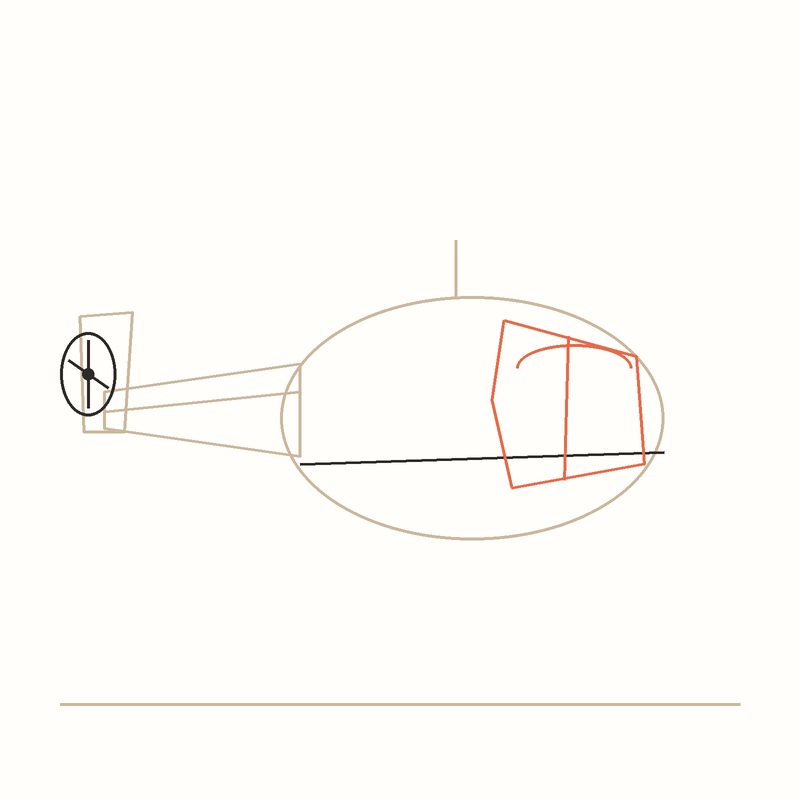
Blow the bubble cockpit: a big rounded window wrapping the nose, split by one divider, with a shine arc across the top.
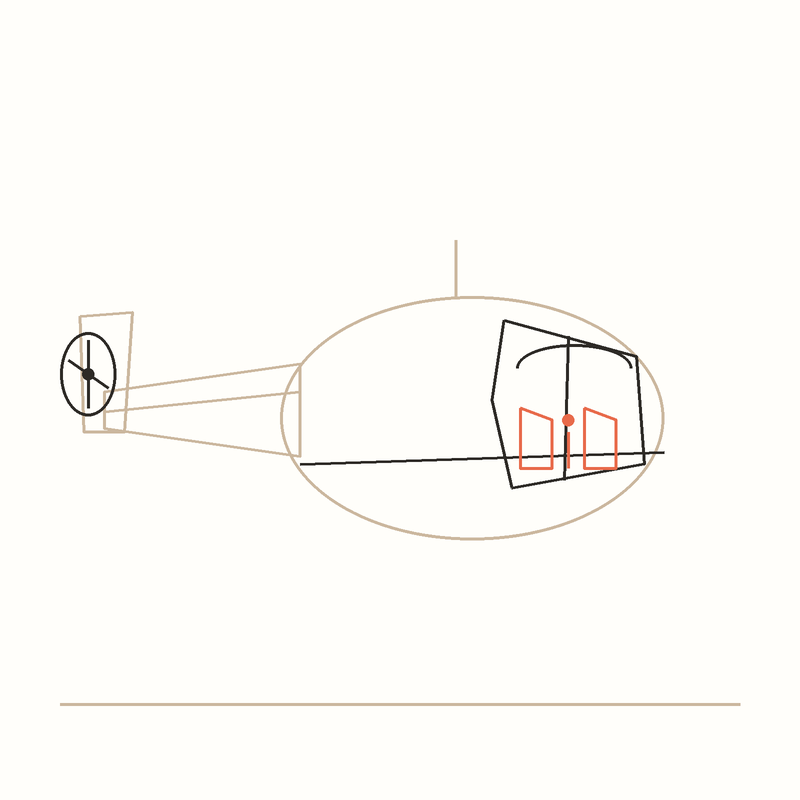
Put the crew in: two seat backs and headrests through the glass, and the control stick between them.
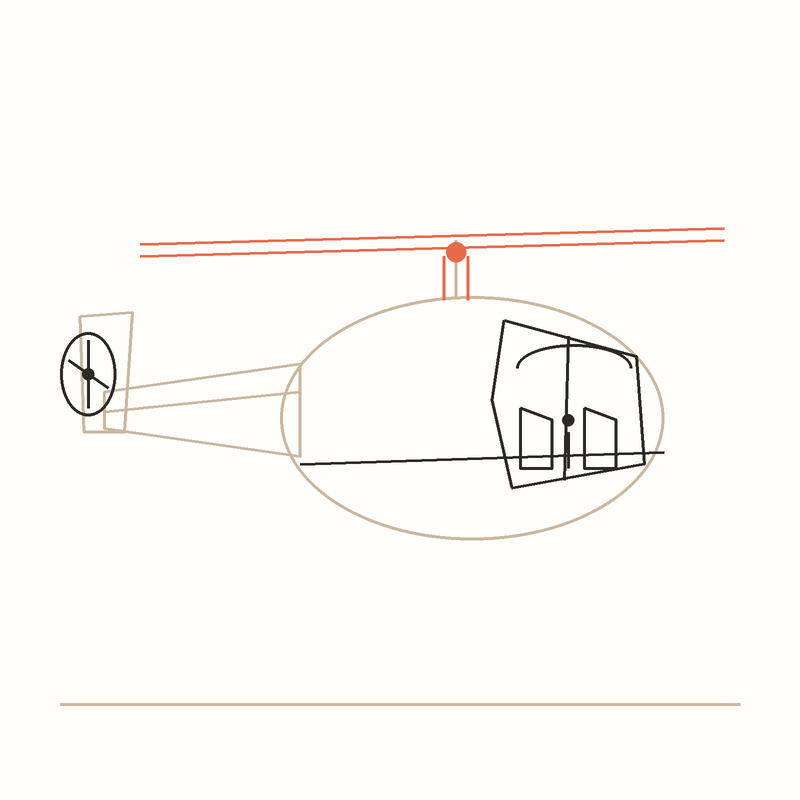
Raise the mast and lay the main rotor across the sky — two long lines for one long blade, hub dead centre over the body.
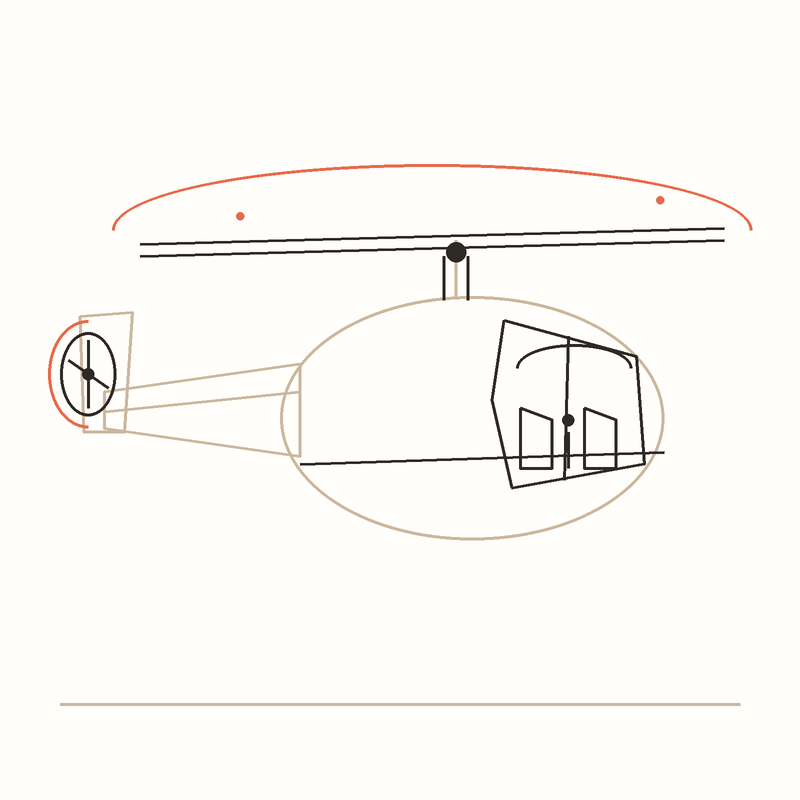
Spin it: one great blur arc over the rotor's path, a blur arc at the tail rotor, and a couple of dust motes in the wash.
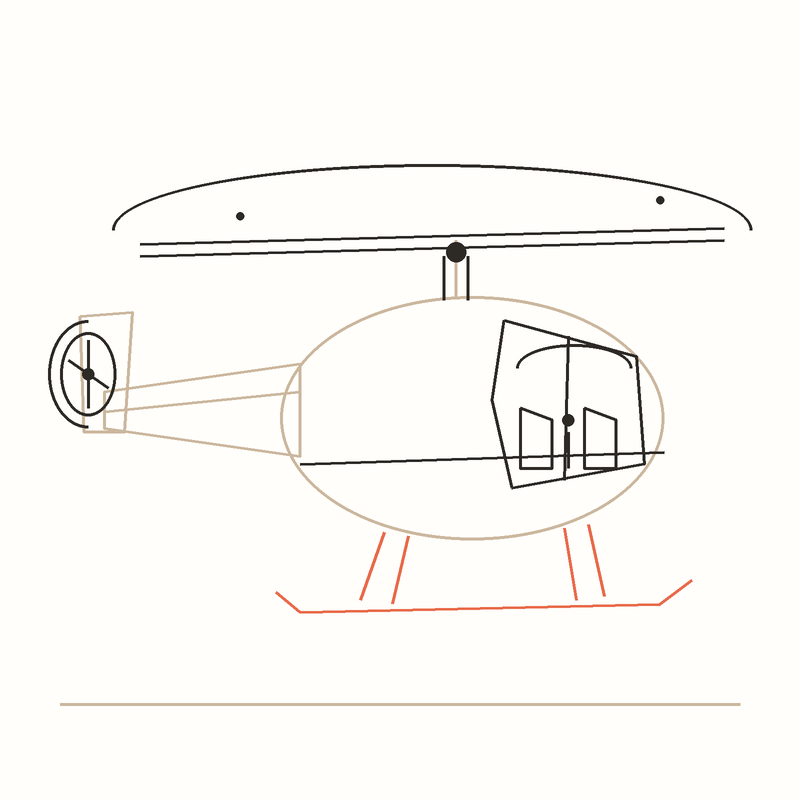
Hang the landing skids: four struts dropping from the belly, joined by two long skid tubes with upturned noses.
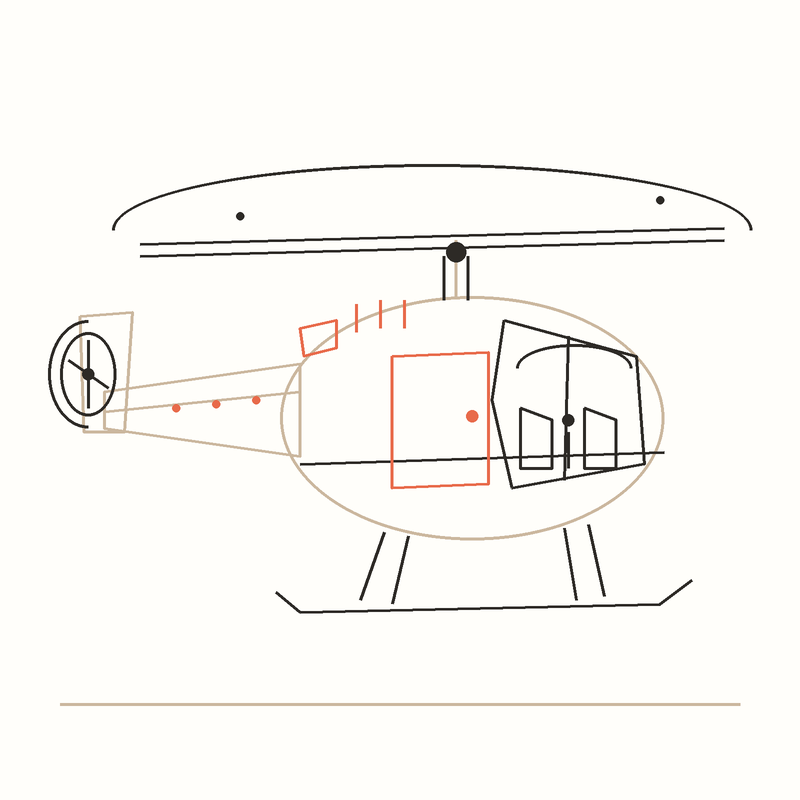
Detail the machine: engine vent slats on the spine, the exhaust, a door with a handle, and rivet dots marching down the boom.
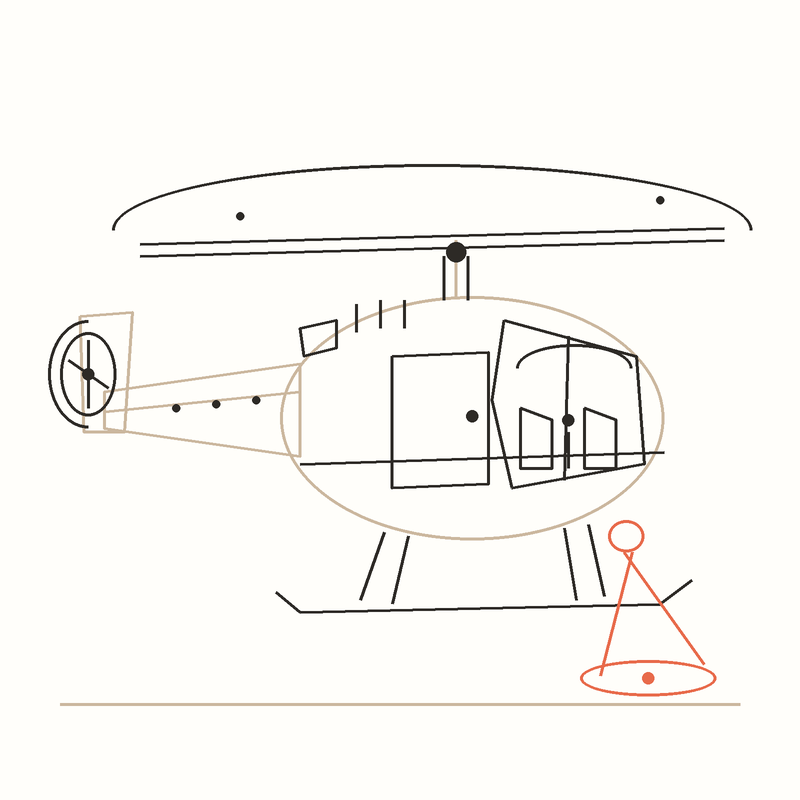
Switch on the searchlight under the nose and drop its beam to a lit patch on the ground.
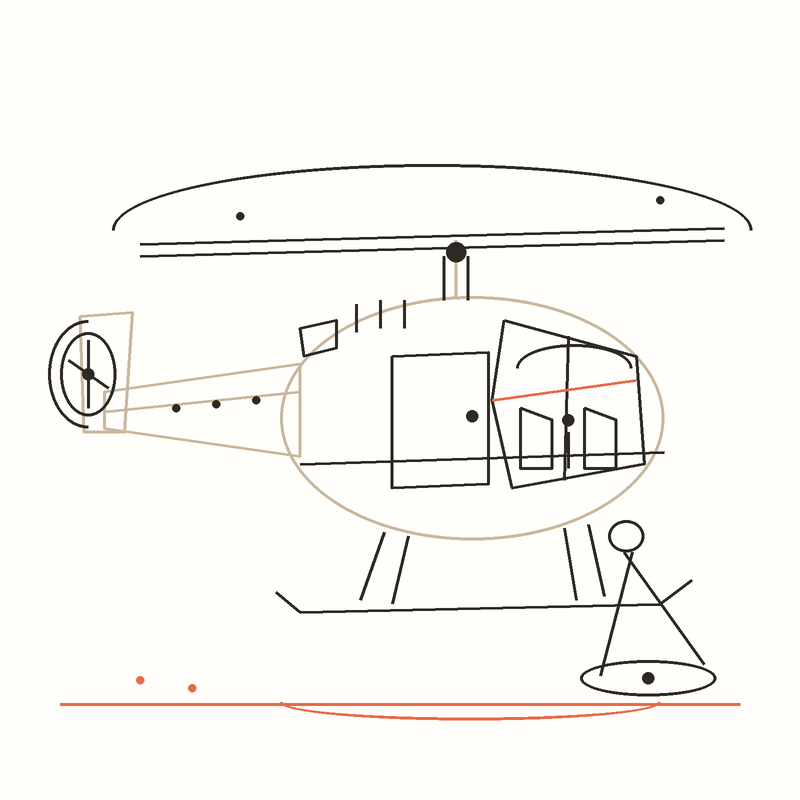
Finish with the ground line, the hover shadow, and a final panel line. Boss machine complete — you drew the hardest vehicle in the sky.
Coach tips for this lesson
Before you call it done, run these three checks — they're the same ones the app asks in its Coach Check:
- Does the tail boom run straight and taper gently, never sagging or kinking?
- Is the main rotor level, with its hub exactly over the mast?
- Do both skid tubes run parallel, sharing the same height off the ground?
The tail boom is one long gesture: two lines leaving the body together and meeting the fin closer together, but never bending on the way. A kink halfway makes the tail look broken and re-glued. Draw each side in a single confident stroke, and check the taper is gradual — wide at the body, narrow at the fin.
A rotor is a spinning disc, and edge-on it's a straight, level line. If it tilts, the helicopter looks like it's falling out of the sky. Keep the blade parallel to the ground, and plant the hub precisely on the mast's top — off-centre hubs wobble, in drawings and in life.
Skids are the helicopter's feet: both tubes parallel, both the same distance below the belly, struts landing on them at matching angles. If one skid rides higher, the machine stands crooked. Draw the ground line first and measure both tubes against it.
Finish this lesson in the app
In the free Draw.guru app you can trace this lesson on screen for an instant score, or photograph your paper drawing and overlay it on the reference with Smart Compare. Join the waitlist for launch.
One launch email, that's it. No spam, unsubscribe any time.