How to Draw a Horse Head in Profile
A free step-by-step lesson in 10 steps — about 22 minutes with just a pencil, an eraser and paper. Draw the light shapes first; they get erased at the end.
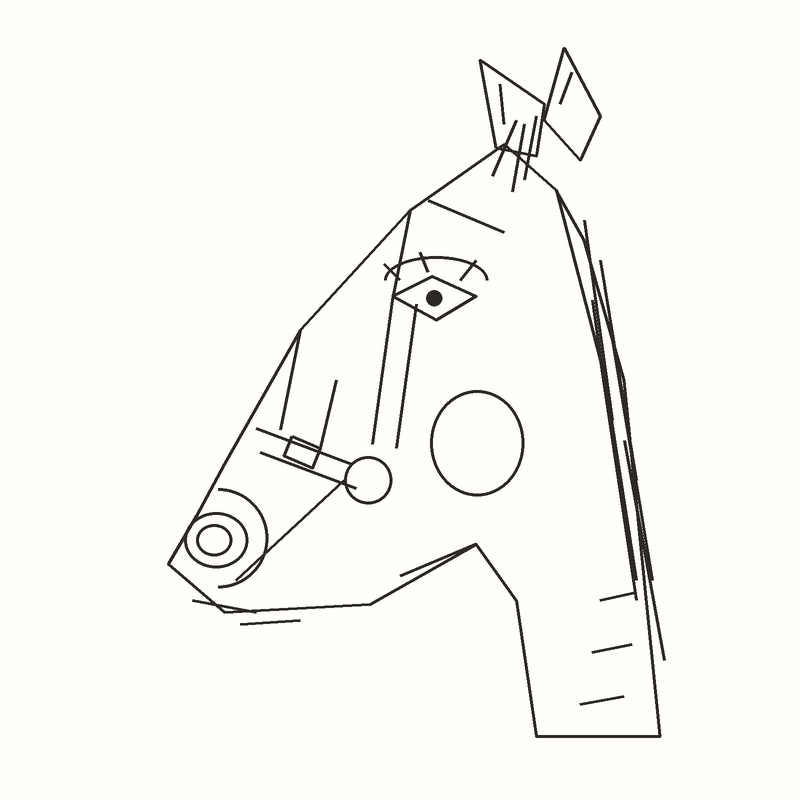
The 10 steps
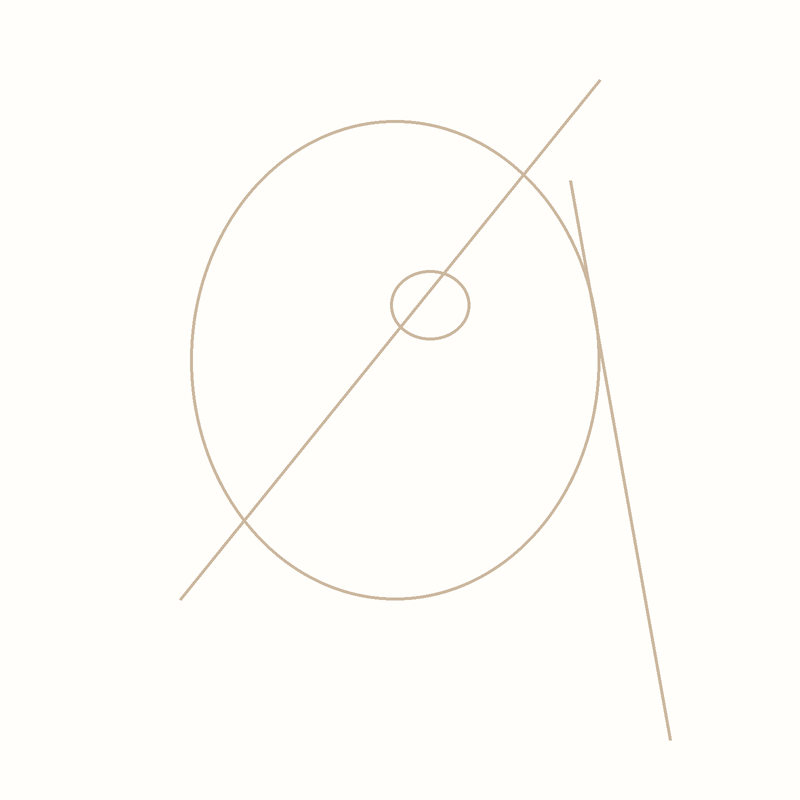
Lightly draw the long diagonal the whole head hangs on, a big placement oval, the neck's back line and a small oval where the eye will sit.
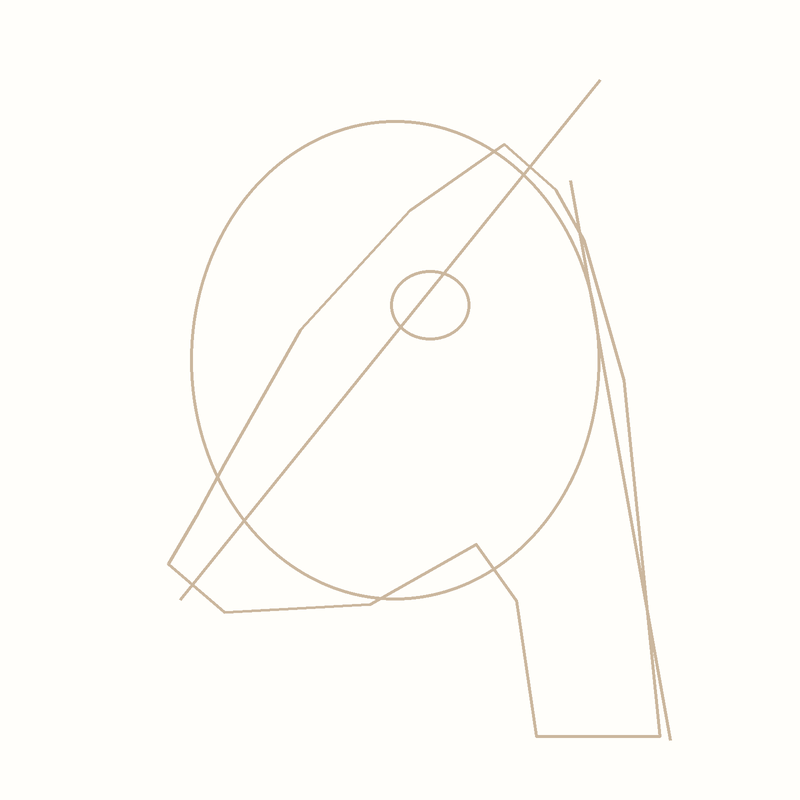
Ink the full silhouette in one shape: forehead, long straight face, soft muzzle, curved jaw, then the neck widening down off the page.
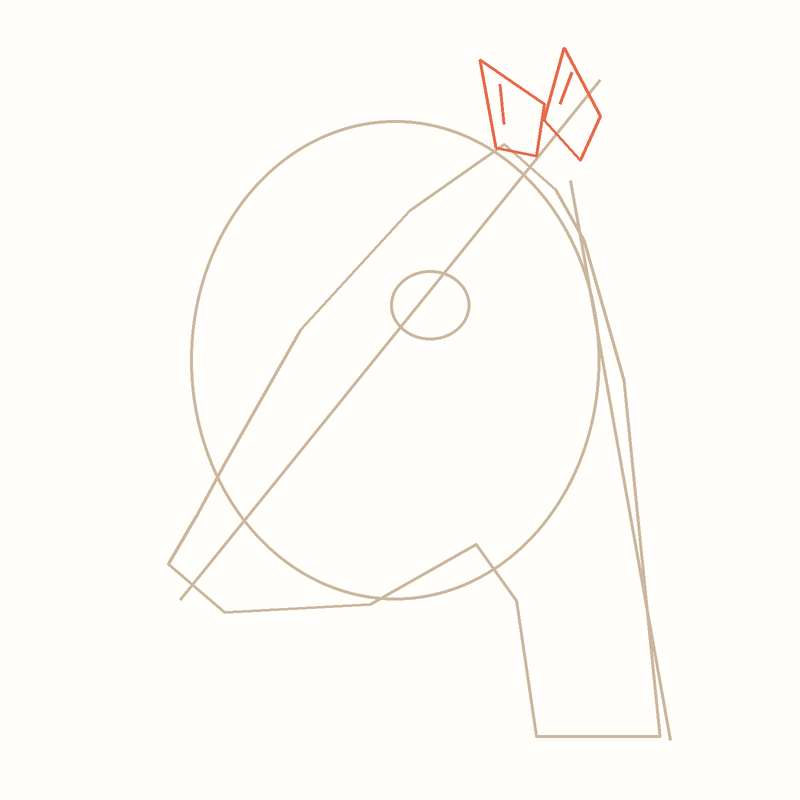
Add two upright ears at the poll, each with a slim inner-ear line. The far ear sits a little higher and narrower.
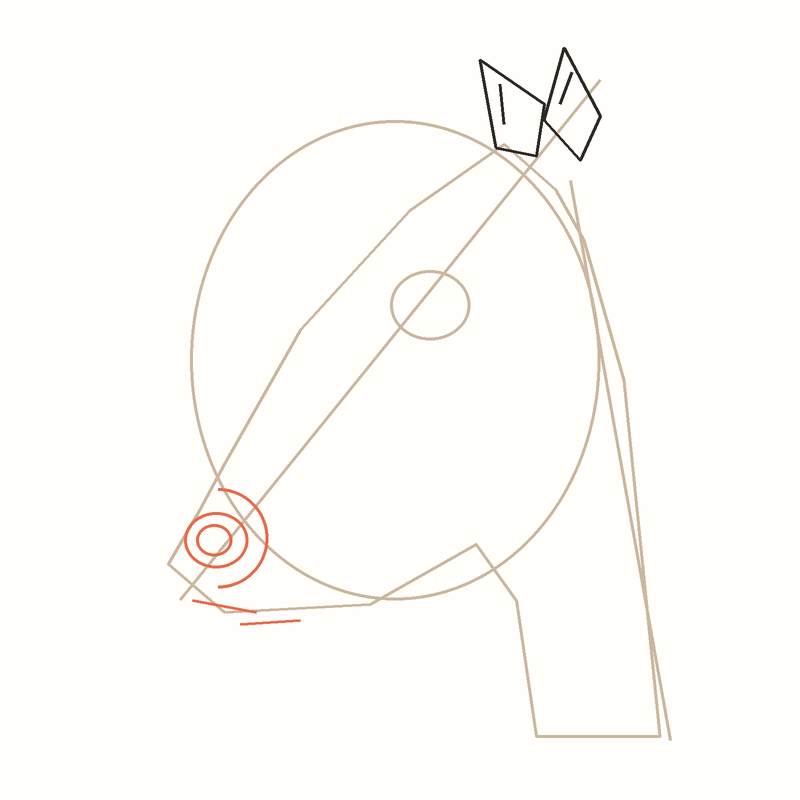
Build the muzzle: a comma-shaped flared nostril with a smaller nostril inside it, a short mouth line and a shallow chin groove.
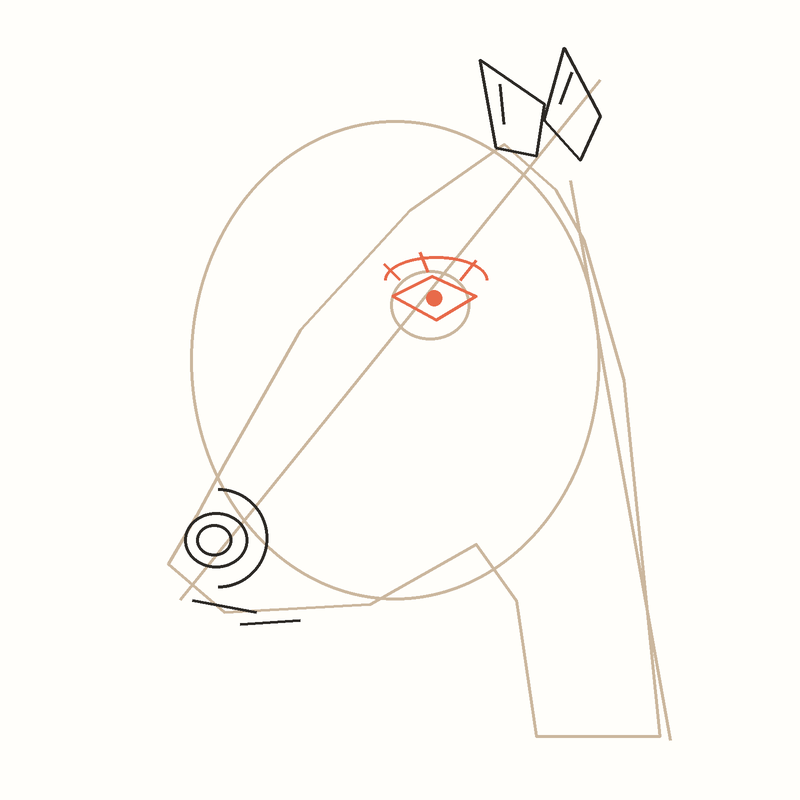
Draw the almond eye with a dark pupil, three short lash strokes flicking up, and a calm brow arc above it.
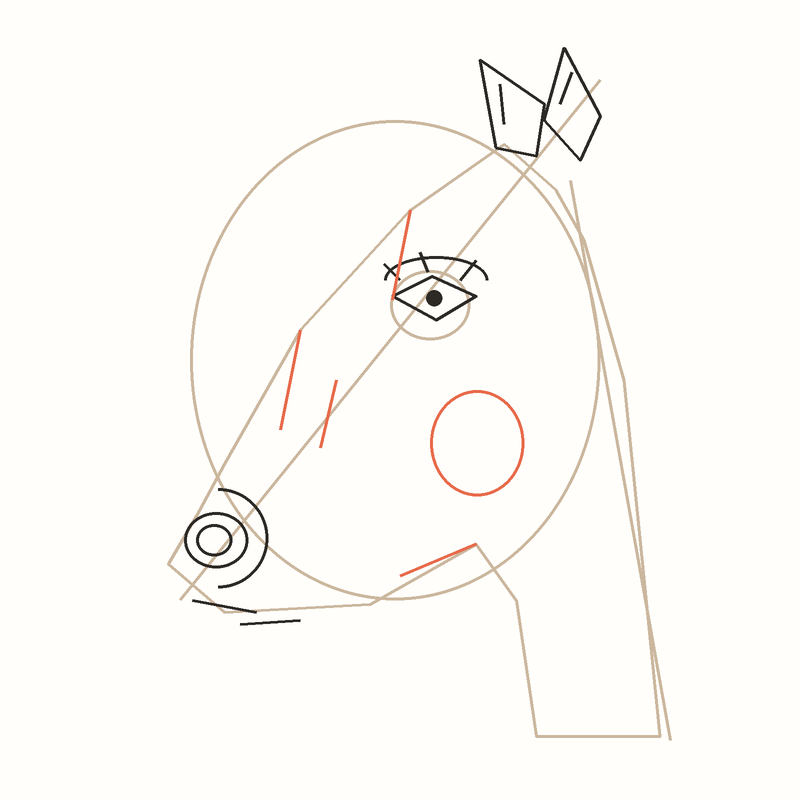
Model the head with plane lines: a round cheek, the jaw's edge, a forehead plane and a line down the nasal bone.
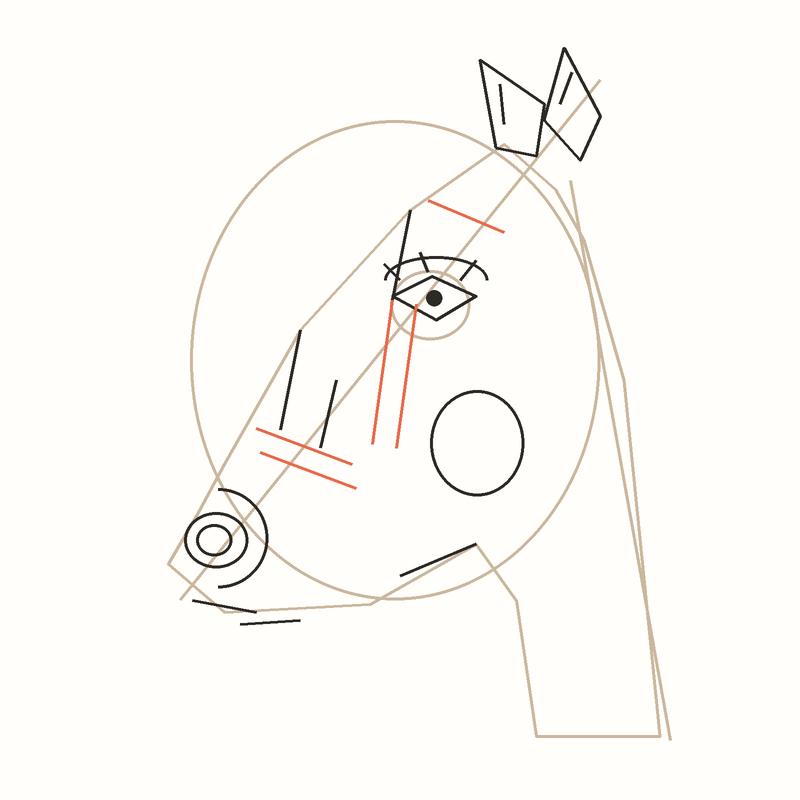
Fit the bridle: a double-line noseband crossing the face, a cheekpiece dropping from the eye, and a browband under the ears.
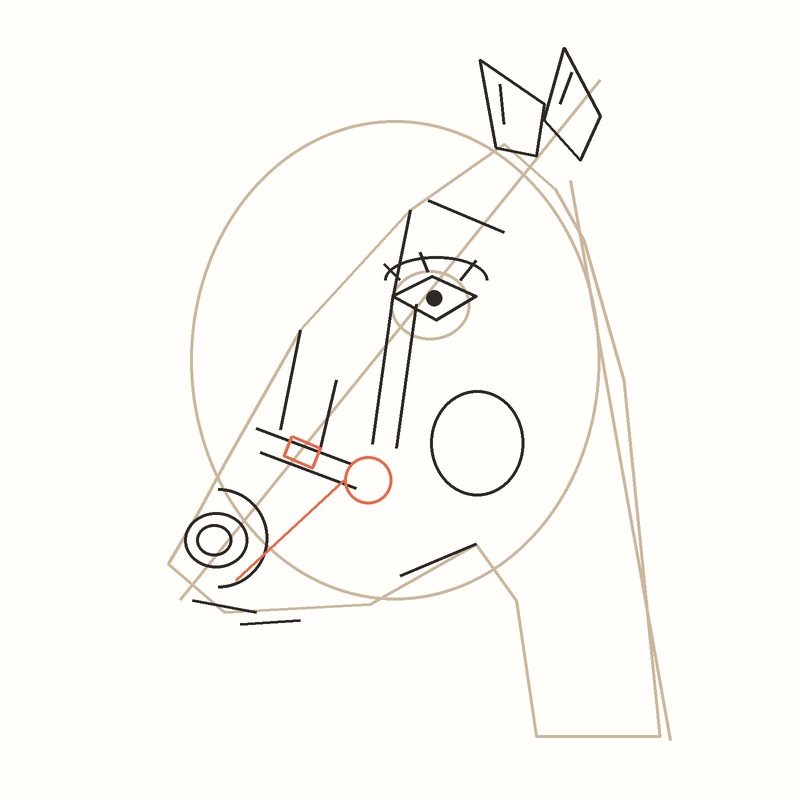
Add the hardware — a round cheek ring where the straps meet, the bit line running to the mouth, and a small buckle on the noseband.
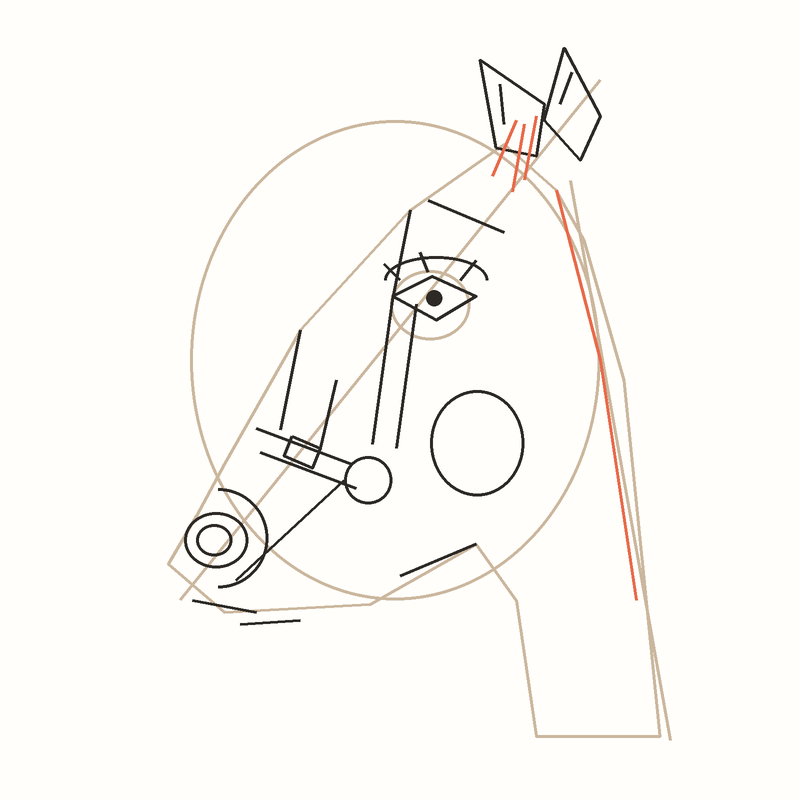
Start the mane: a crest line sweeping down the neck, and three forelock strands falling between the ears.
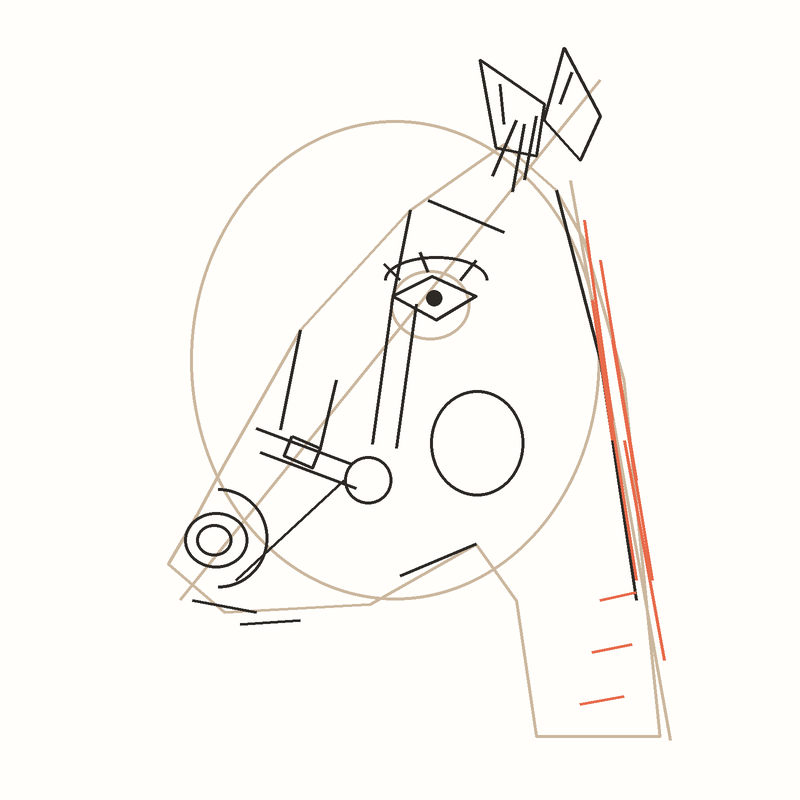
Finish with grouped mane strands falling behind the crest — long curves in bunches — and short hatching strokes low on the neck. Master tier!
Coach tips for this lesson
Before you call it done, run these three checks — they're the same ones the app asks in its Coach Check:
- Does the face read as one long, mostly straight line from forehead to muzzle, without a bump?
- Is the eye placed about halfway down the head, level with the bridle's cheekpiece?
- Do the mane strands fall in groups with gaps, rather than evenly spaced single lines?
A horse's face is famously long: the distance from eye to nostril should roughly equal the distance from ear to eye. If your face looks short and cute like a pony cartoon, stretch the muzzle further down the diagonal and move the nostril with it — the elegance is all in that length.
The eye sits on the head's midline, about halfway between the poll and the nostril, and the bridle's cheekpiece runs almost straight down from it to the ring. If the eye drifts high, the horse looks surprised; low, it looks sleepy. Nudge it onto the guide oval and line the cheekpiece up beneath it.
Real manes fall in bunches: draw three or four strands close together, leave a gap, then another bunch. Evenly spaced single strands read as a fringe or a barcode. Group the strands, vary their lengths, and let every bunch curve the same way the neck curves.
Finish this lesson in the app
In the free Draw.guru app you can trace this lesson on screen for an instant score, or photograph your paper drawing and overlay it on the reference with Smart Compare. Join the waitlist for launch.
One launch email, that's it. No spam, unsubscribe any time.