Home · Lessons · Objects & Still Life
How to Draw an Open Book with Glasses
A free step-by-step lesson in 11 steps — about 23 minutes with just a pencil, an eraser and paper. Draw the light shapes first; they get erased at the end.
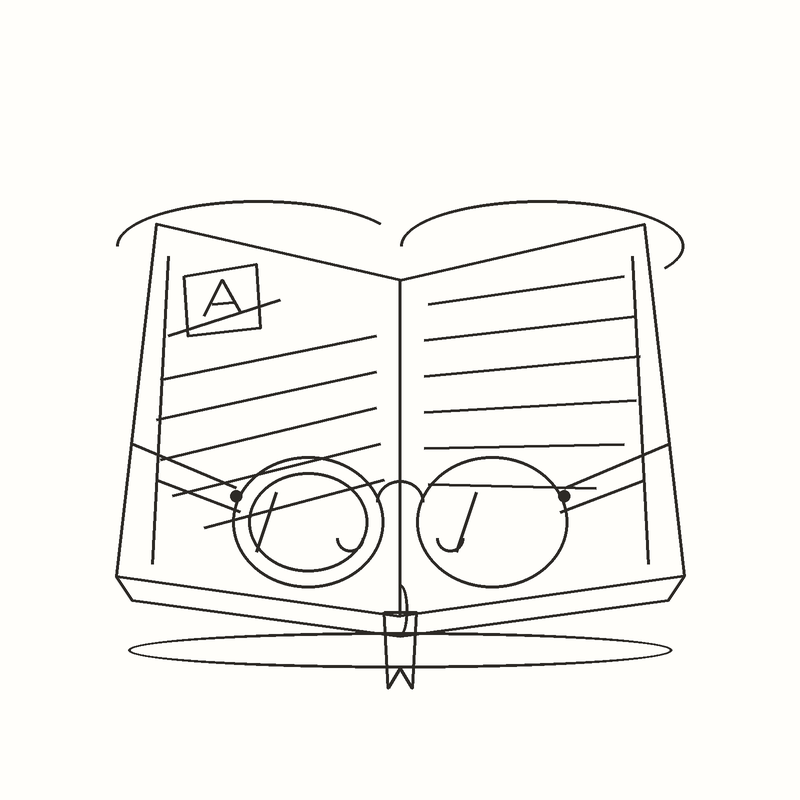
The 11 steps
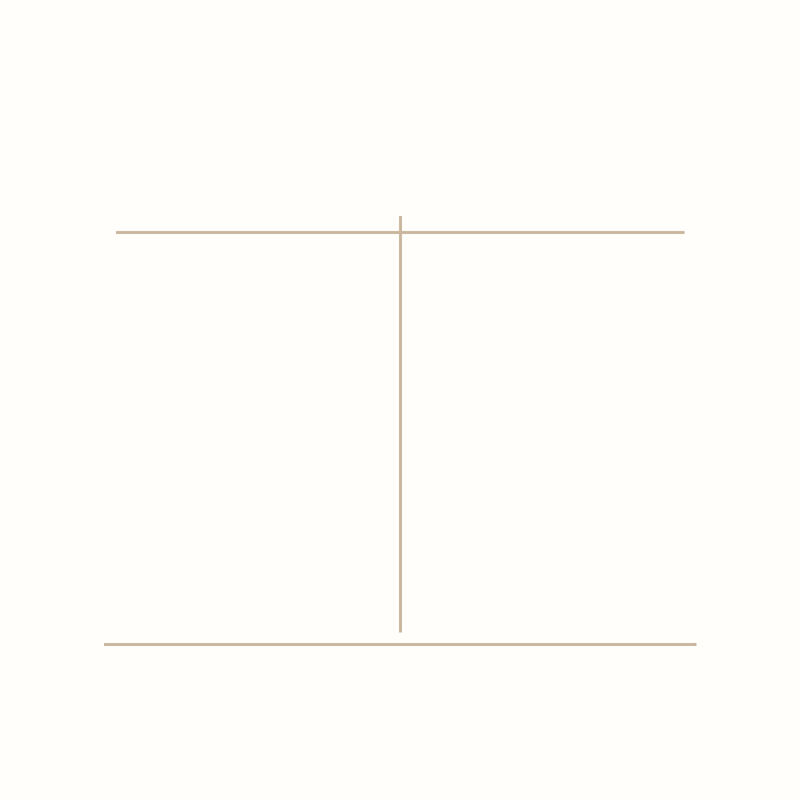
An open book is two curves arguing about a spine: mark the spine line, the top corners of the spread, and the table beneath.
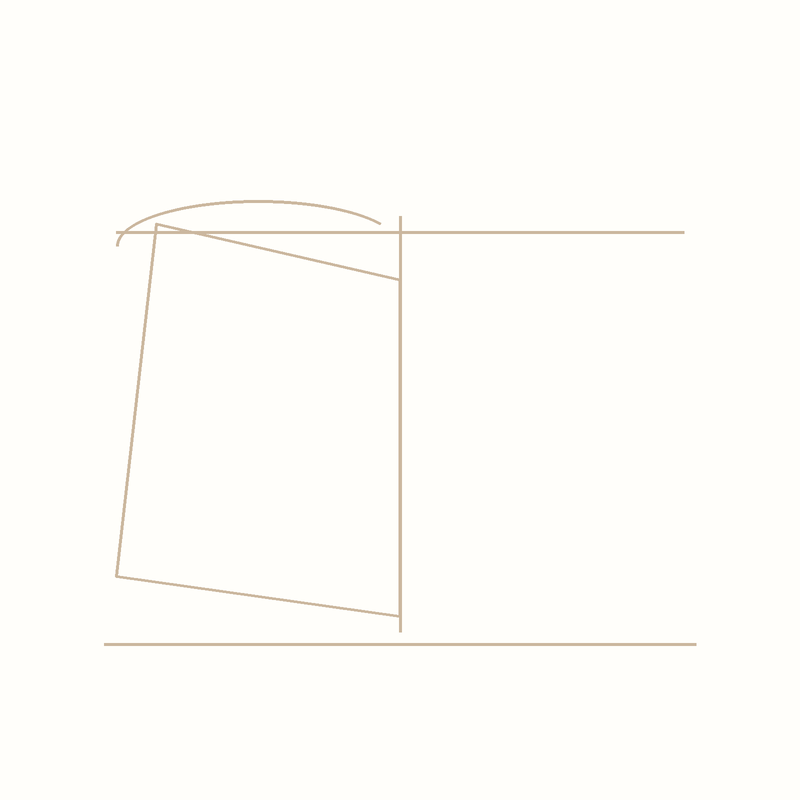
Draw the left page — a top edge that sags gently toward the spine, a fore-edge that stands straight, and the bottom corner reaching toward you.
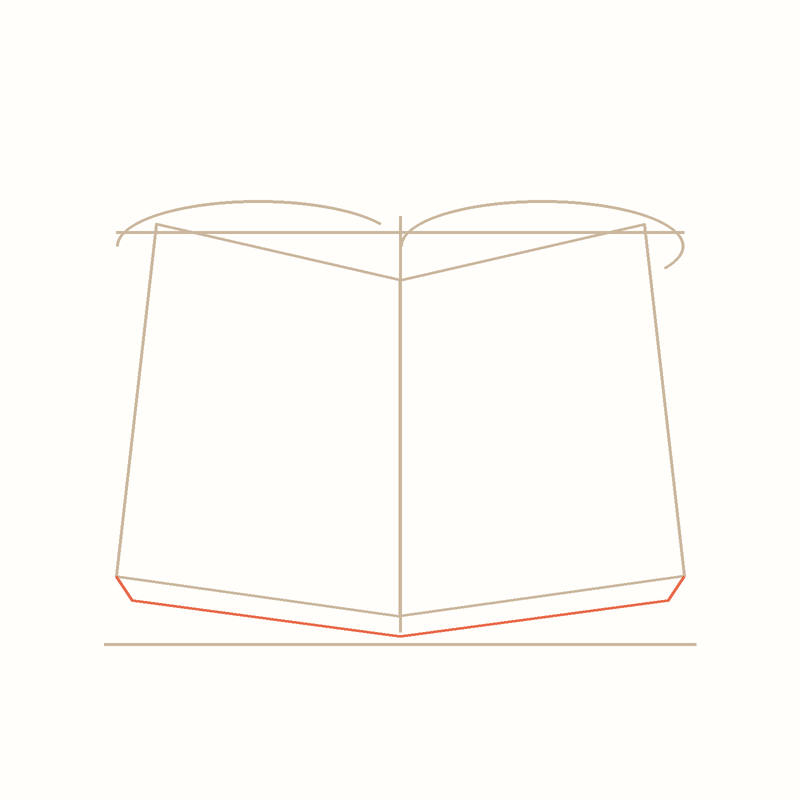
Mirror the right page, then add the stacked page edges under both — three thin lines that give the book its thickness.
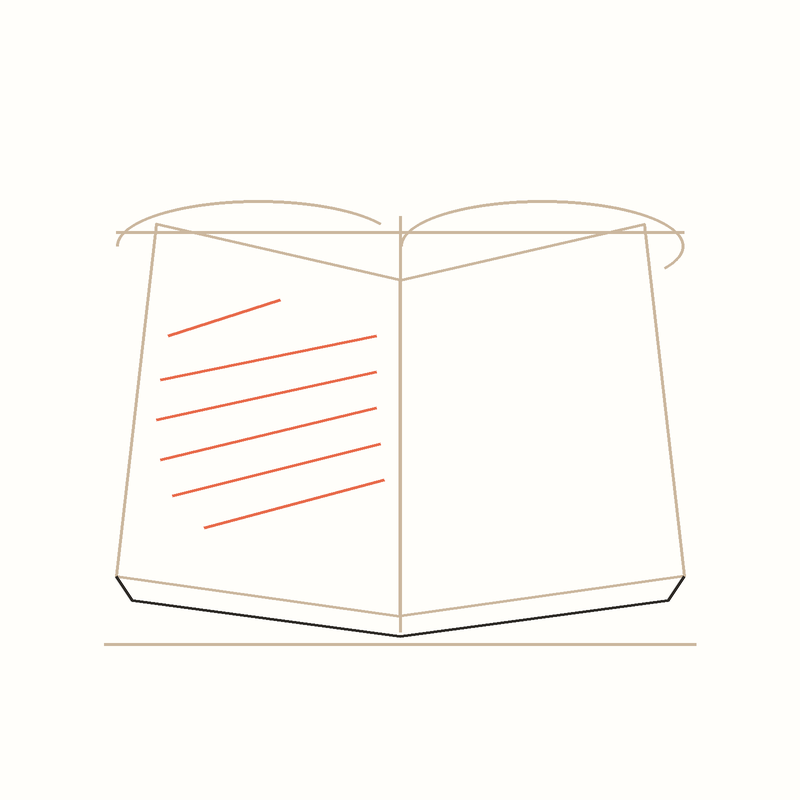
Rule the left page's text: six lines that slant and shorten as the page curves away. Text follows the page, never the horizon.
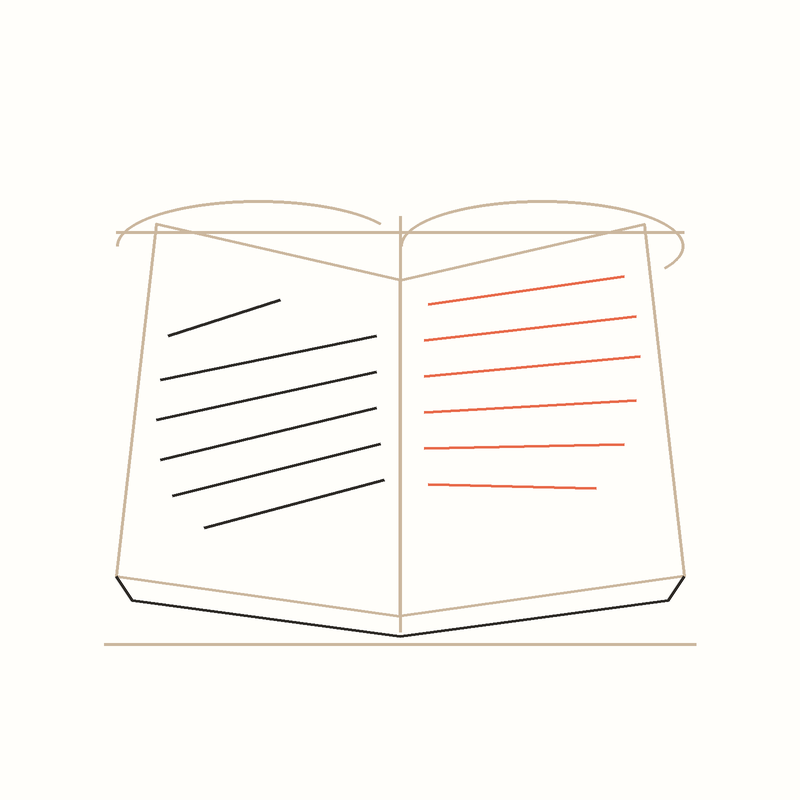
Answer with the right page's text, slanting the opposite way. The two slants should meet at the spine like a shallow valley.
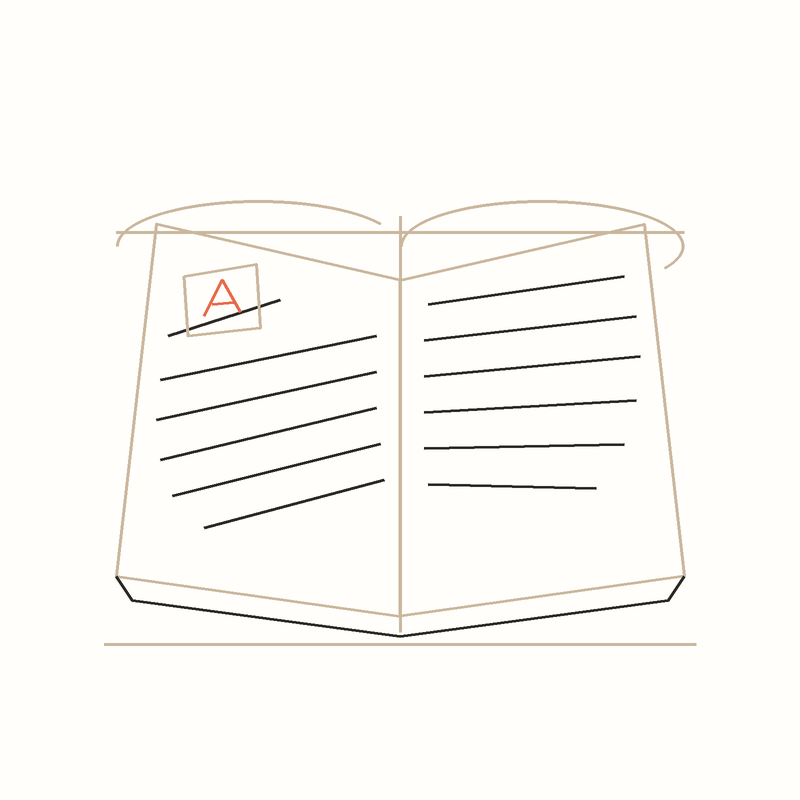
Open the text with a drop cap: a squared initial letter two lines tall at the top of the left page, with a simple A drawn inside its frame.
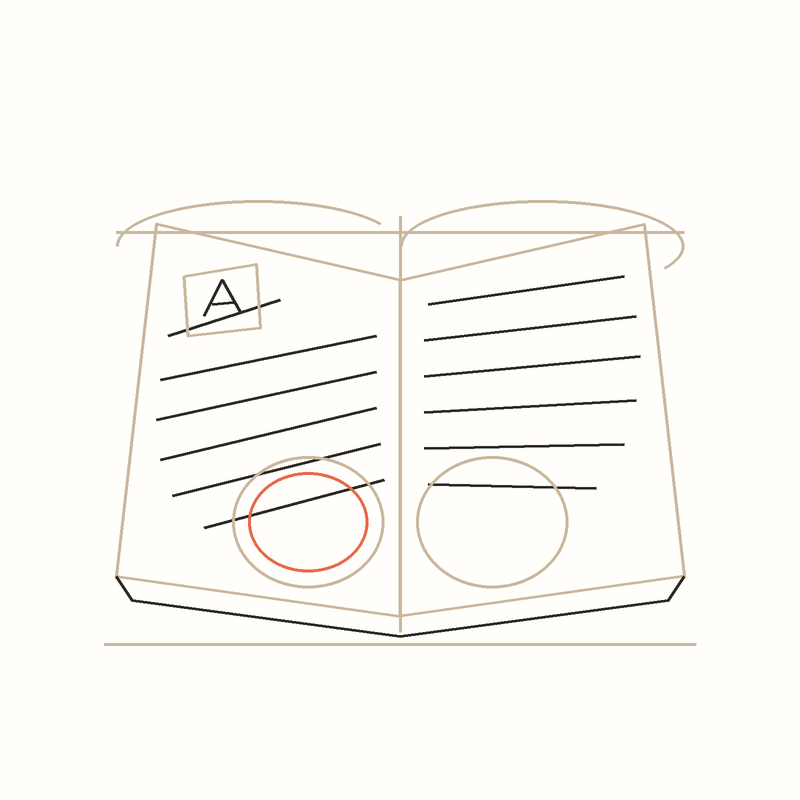
Rest the glasses across the lower spread: two round lenses, big and calm, sitting ON the pages — their bottoms should overlap text lines, not float above them.
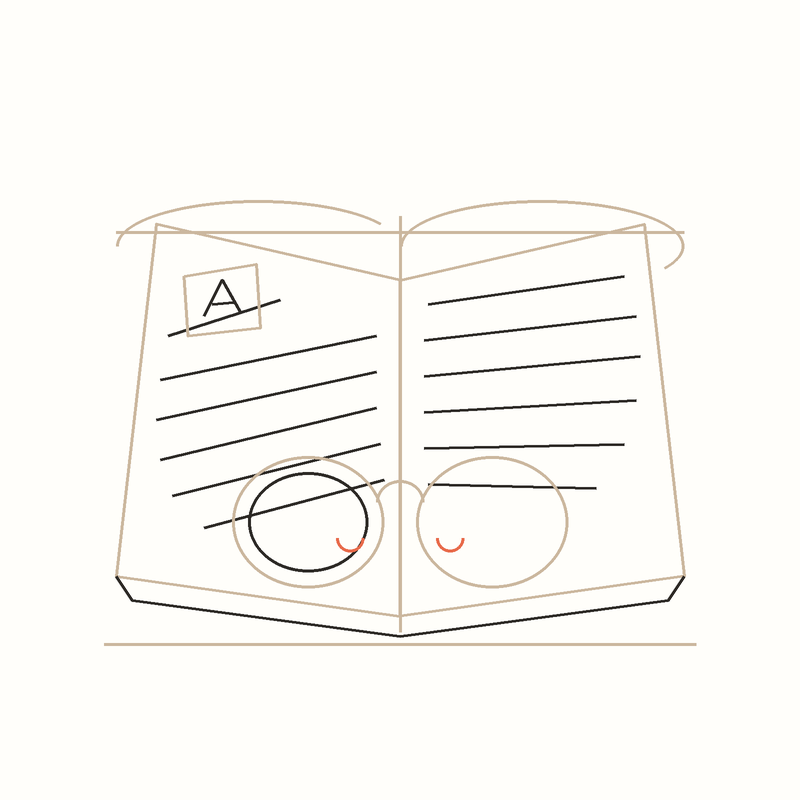
Bridge the lenses with a shallow arc and add two tiny nose pads beneath it. The bridge is small; the lenses do the talking.
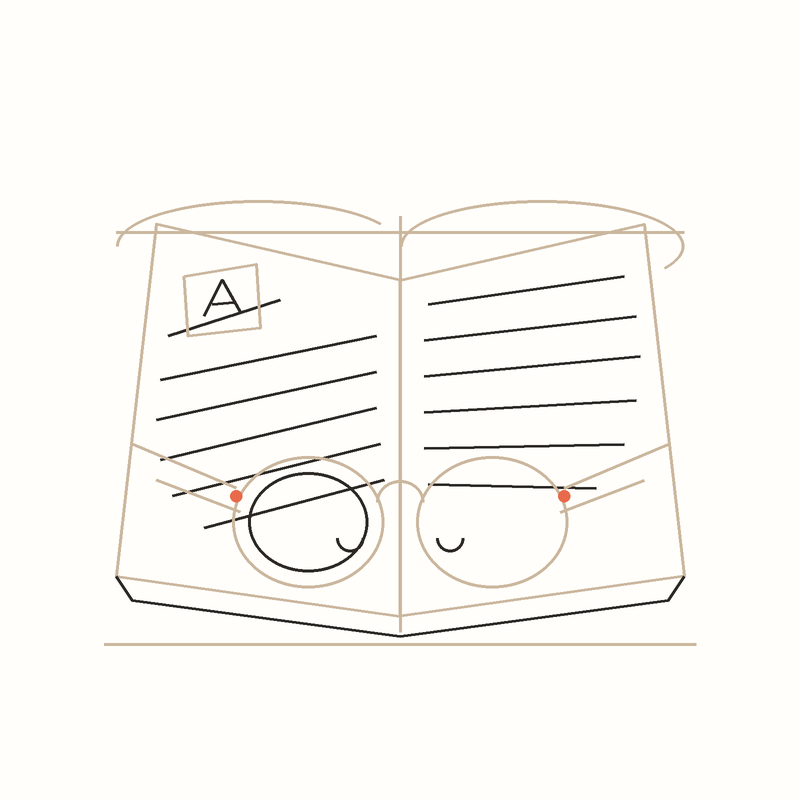
Fold the temple arms out from the hinges — paired lines running to the page edges, narrowing as they go. Dot each hinge.
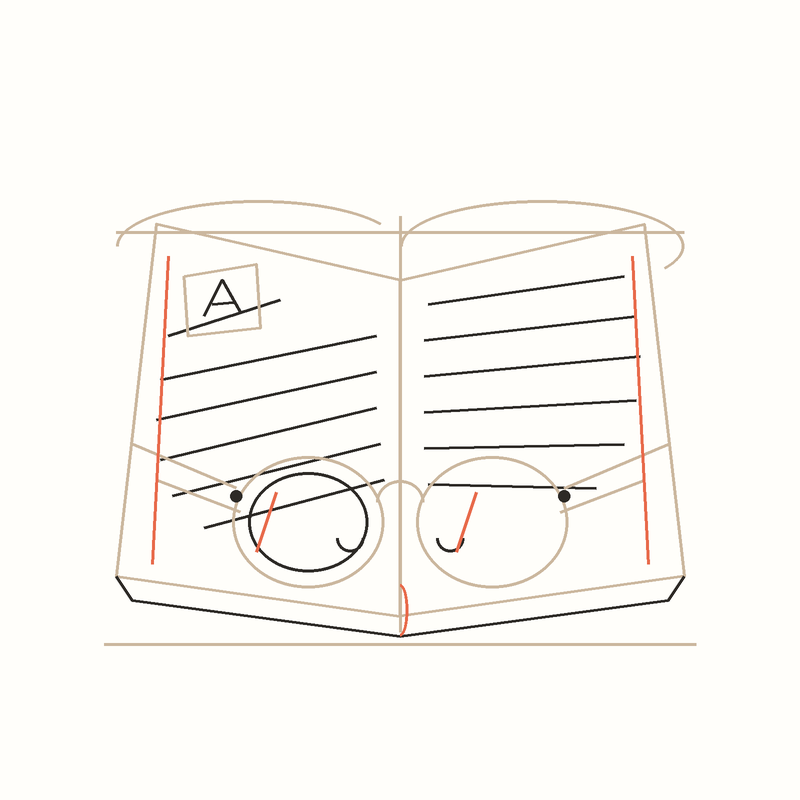
Shade the page curls with a long line inside each fore-edge, and give each lens one slim reflection slash. Glass and paper both catch light, differently.
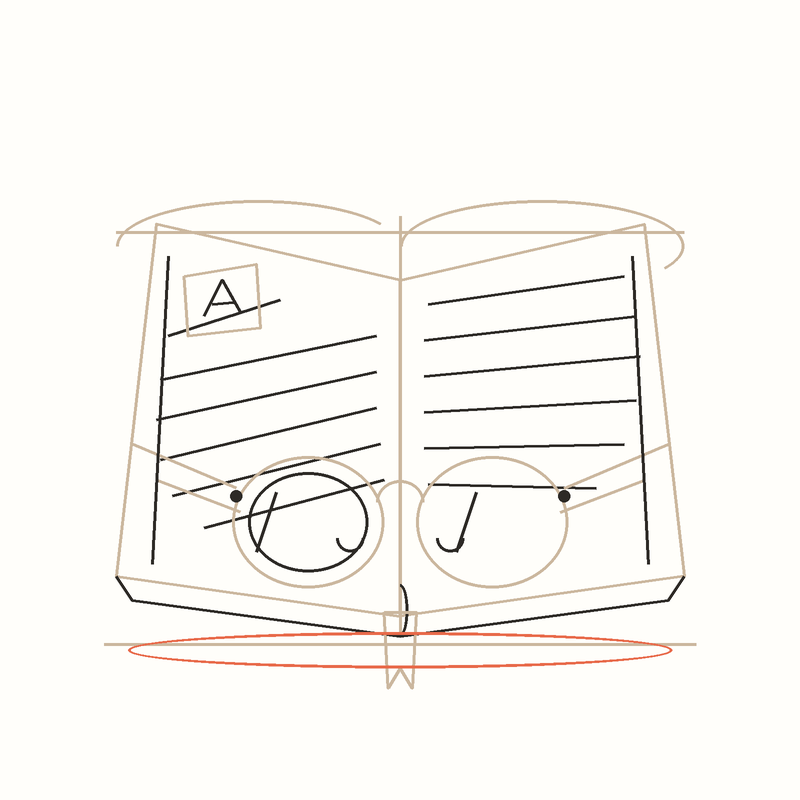
Drop a ribbon bookmark from the spine's base with a notched end, and pool one soft shadow under the whole book.
Coach tips for this lesson
Before you call it done, run these three checks — they're the same ones the app asks in its Coach Check:
- Do the text lines slant WITH each page and meet in a valley at the spine?
- Do the glasses rest on the pages, overlapping text, rather than floating?
- Are the two lenses the same size, with the bridge centred between them?
On an open book, text lines are never horizontal: each page's lines tilt down toward the spine and shorten as the page curves. If your lines run flat across both pages, the book looks like a billboard. Re-slant each side toward the centre valley.
Resting objects overlap what they rest on. The lenses' lower rims should cross a text line or two, and the temple arms should touch the pages. Floating glasses are the still-life equivalent of a hovering hat — lower them until contact is visible.
Round glasses are a symmetry test: equal lens circles, bridge dead centre, temple arms leaving at the same height. Measure lens to lens with your eye; if one is bigger, shrink it — enlarging the small one usually breaks the bridge.
Finish this lesson in the app
In the free Draw.guru app you can trace this lesson on screen for an instant score, or photograph your paper drawing and overlay it on the reference with Smart Compare. Join the waitlist for launch.
One launch email, that's it. No spam, unsubscribe any time.