Home · Lessons · People & Hands
How to Draw a Seated Figure, Crossed Legs
A free step-by-step lesson in 11 steps — about 25 minutes with just a pencil, an eraser and paper. Draw the light shapes first; they get erased at the end.
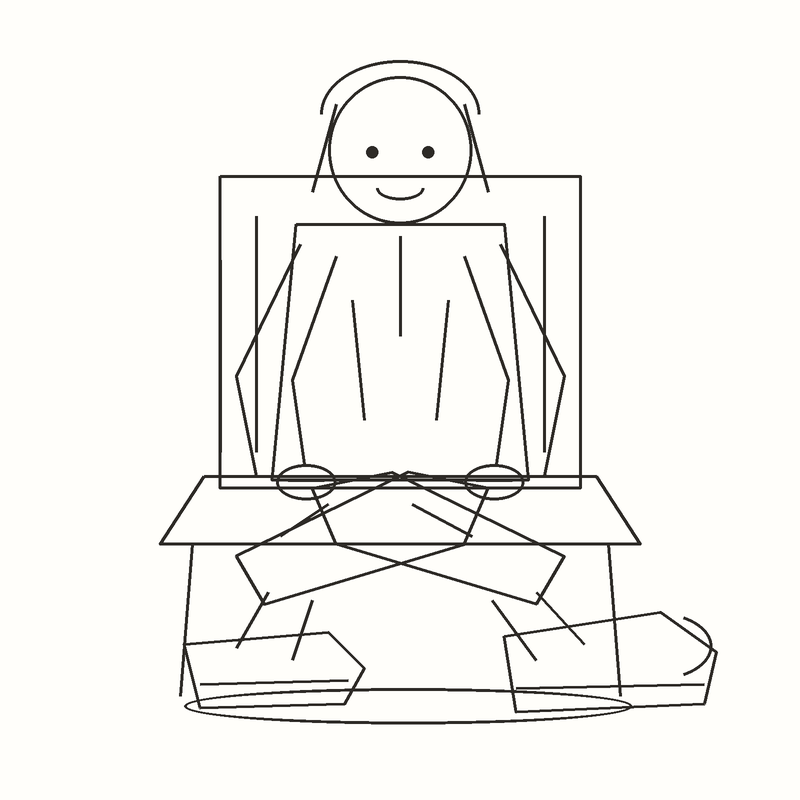
The 11 steps
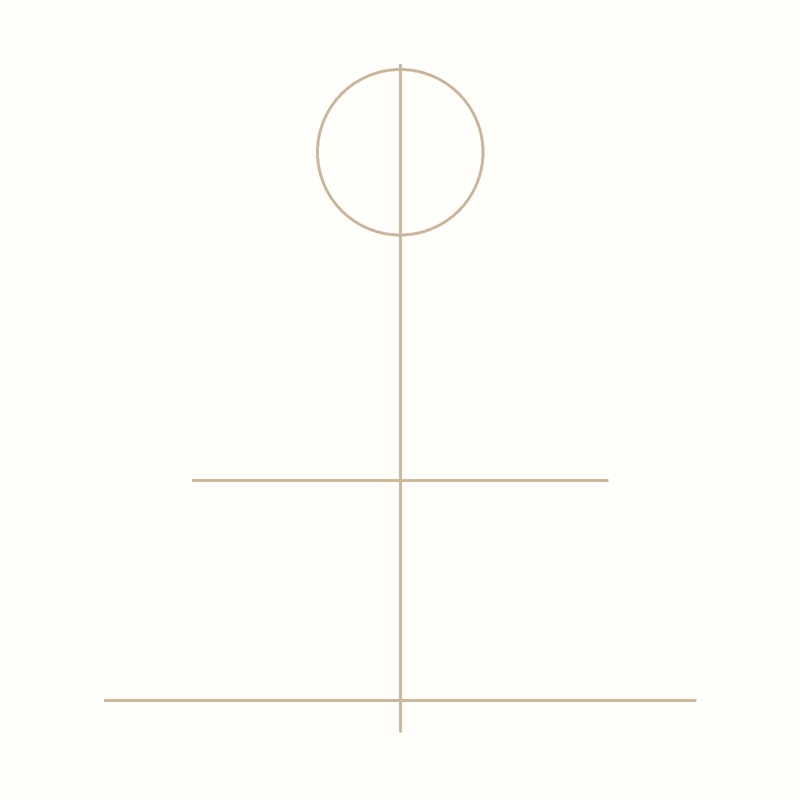
Set the stage first: centre guide, the seat line, the floor, and a head oval floating above where the chair back will top out.
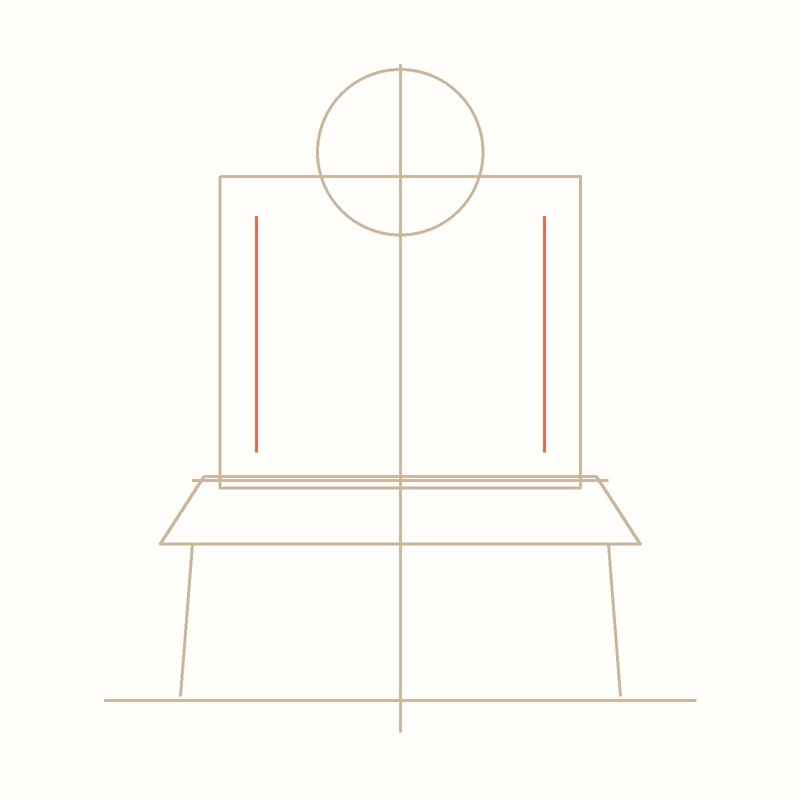
Build the chair — a tall slatted back, a seat that widens toward you, and two legs to the floor. The figure needs furniture that obeys the same floor.
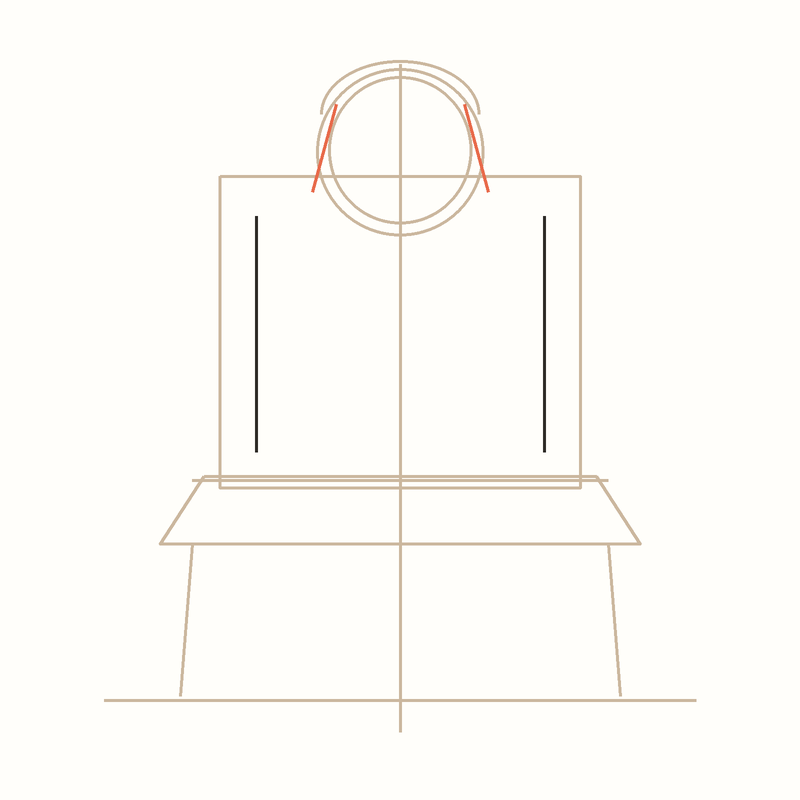
Draw the head and a simple hair mass with two side strands. Keep the face blank for now; structure first.
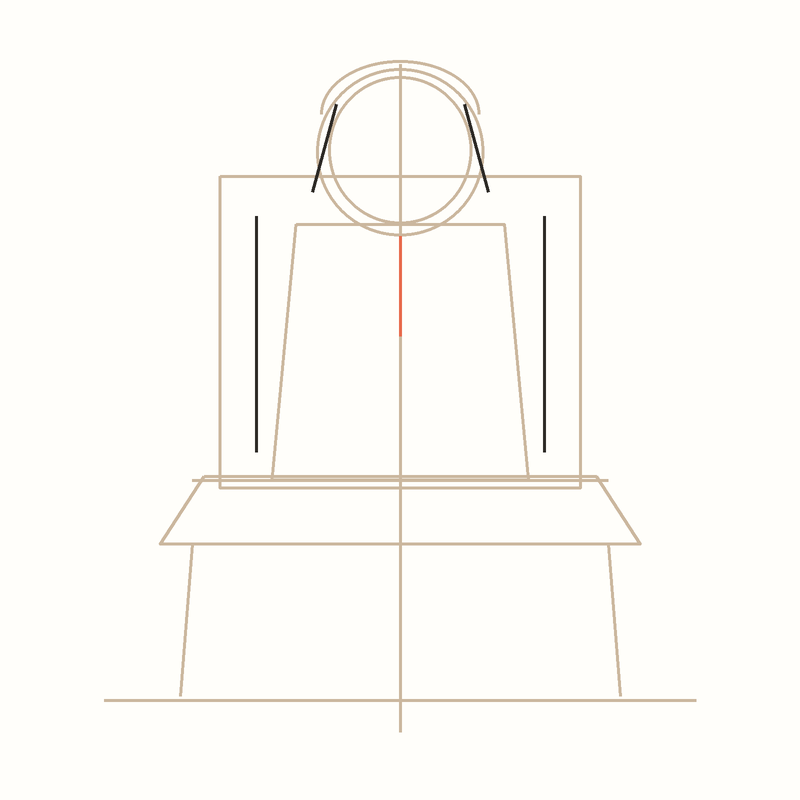
Drop the torso from shoulders to seat as one tapered block, with a centre placket line.
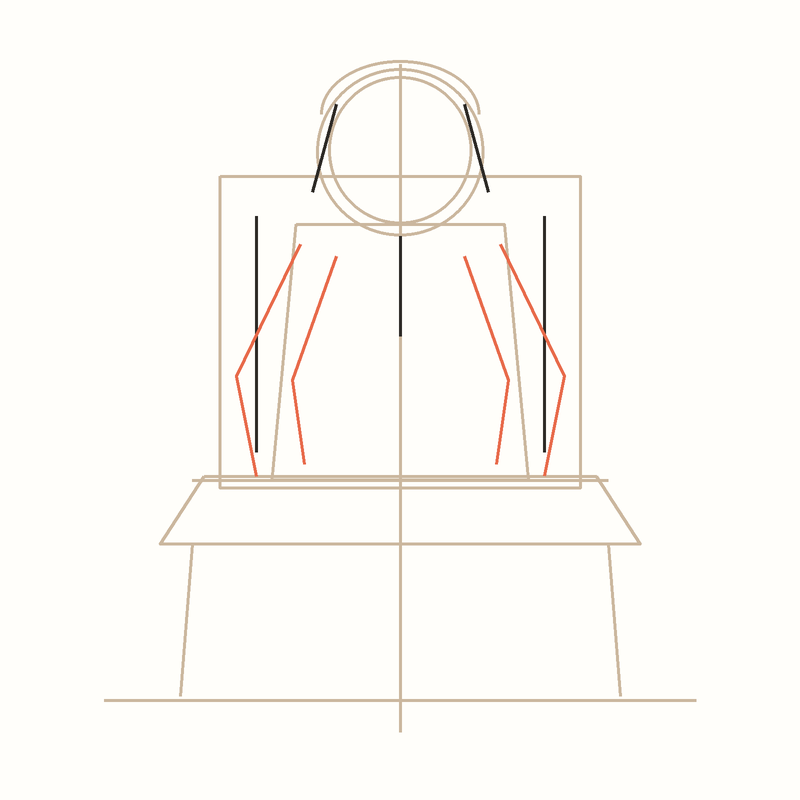
Run the arms down in paired lines so the forearms angle in toward the knees. Elbows stay outside the torso's silhouette.
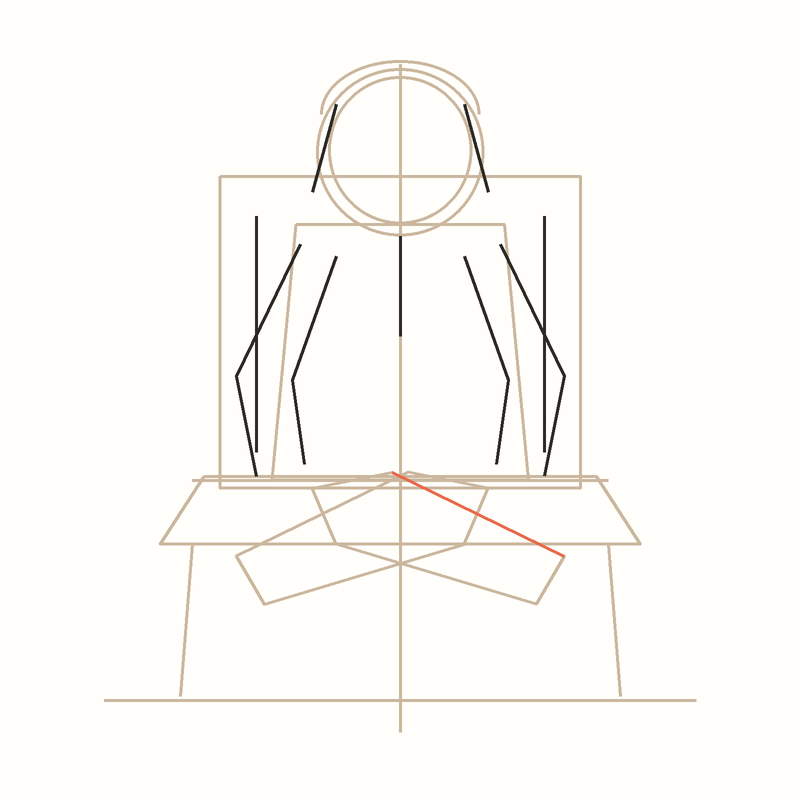
The crossing: draw the right thigh travelling over the left, then the left thigh beneath it, and re-ink the overlap line so the over-leg clearly wins.
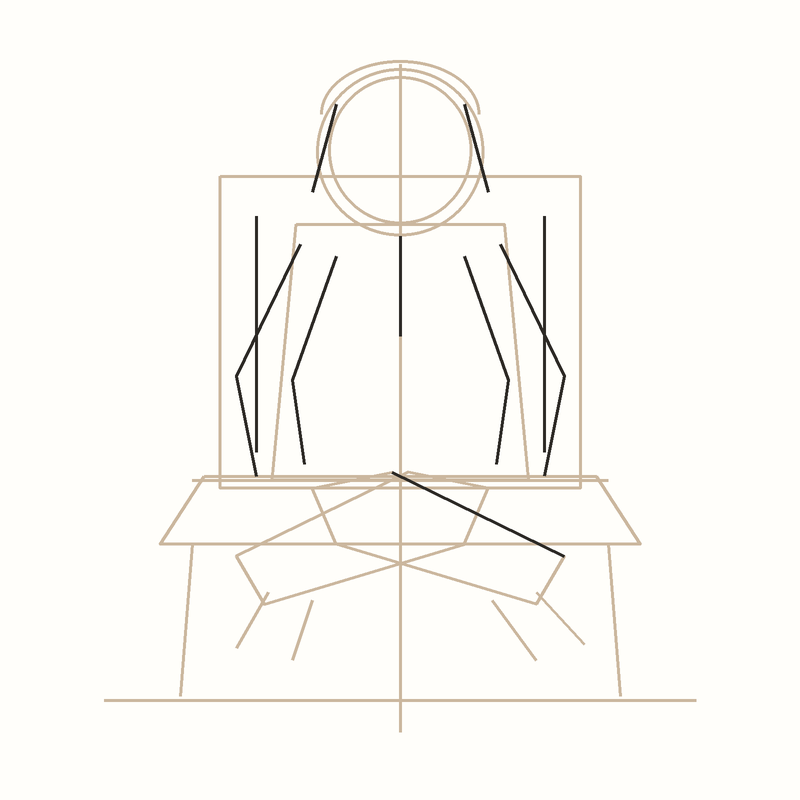
Drop both shins from the crossed knees — the front leg's shin falls almost straight, the back leg's angles away.
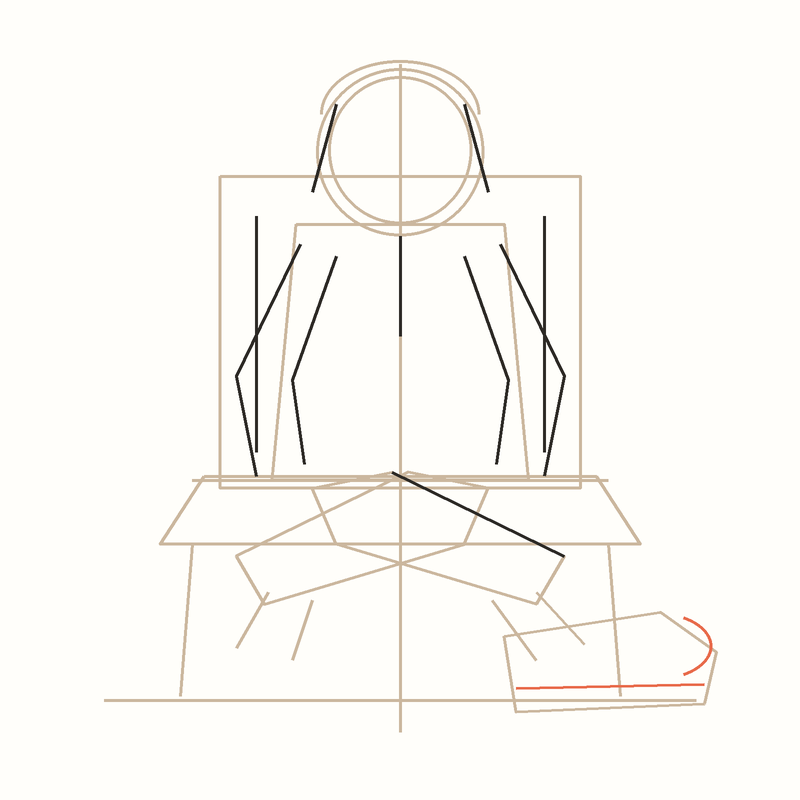
Now the payoff: the foreground shoe, drawn far bigger than feels polite, with a sole line and a toe-cap arc. Foreshortening is exaggeration with rules.
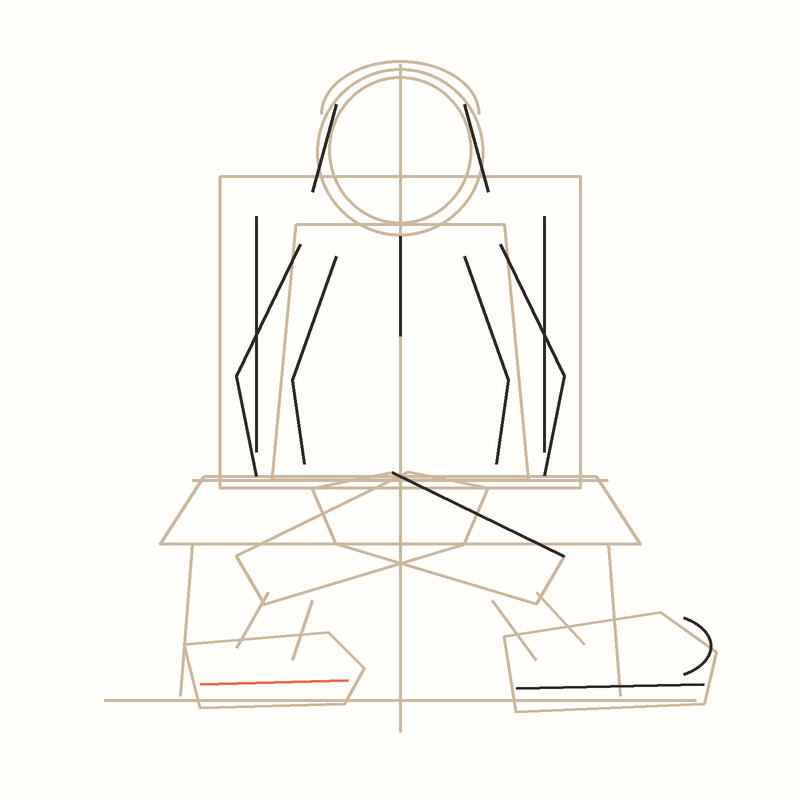
Tuck the far shoe behind, noticeably smaller and simpler. The size gap between the shoes is the depth of the whole drawing.
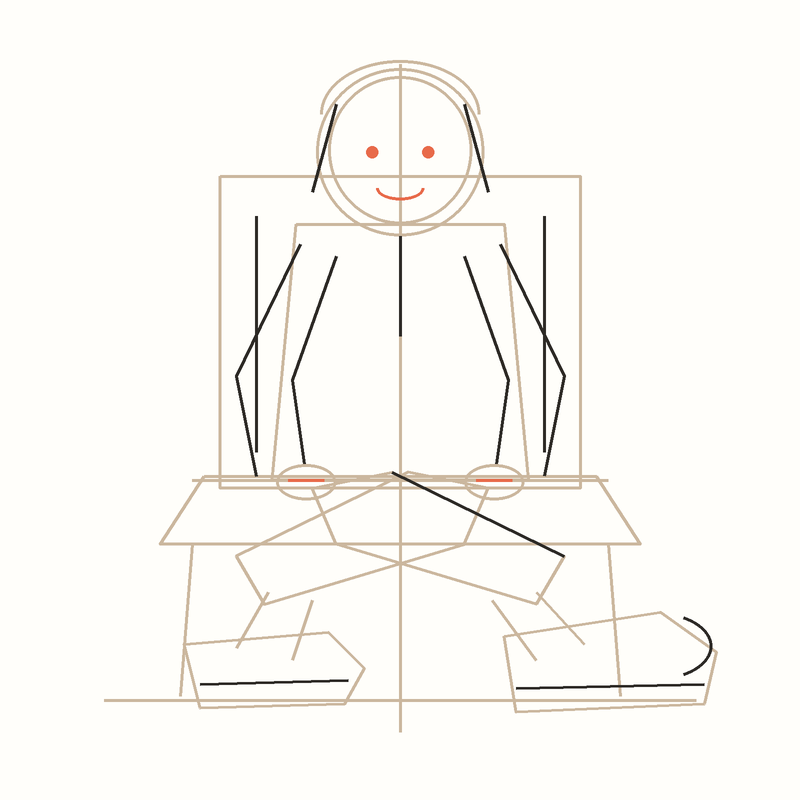
Rest an oval hand on each knee — fingers suggested with one line — and give the face two eyes and a calm smile.
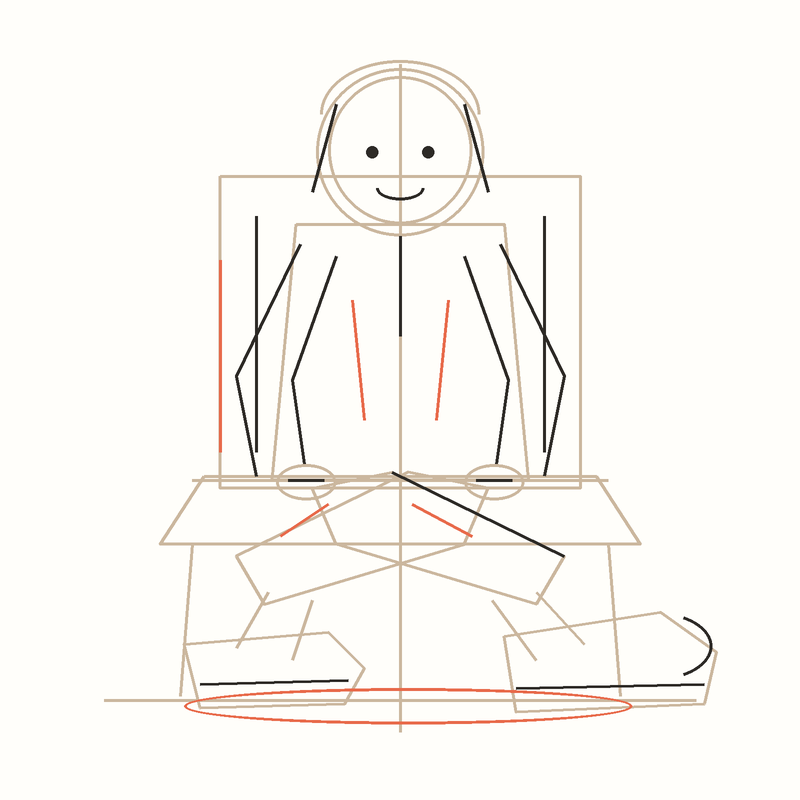
Finish with shirt folds falling from the chest, crease lines where the thighs cross, and one soft shadow pooling under the chair.
Coach tips for this lesson
Before you call it done, run these three checks — they're the same ones the app asks in its Coach Check:
- Can you tell instantly which leg is on top at the crossing?
- Is the front shoe at least a third bigger than the back shoe?
- Do both hands actually touch the knees they rest on?
A crossing only reads if one contour is unbroken. The top leg's outline must run clean across while the under-leg's line stops at the overlap. If both outlines are complete, the legs look woven — erase the under-leg's line where it passes beneath.
Front-on seated figures live or die by the shoes: the near shoe thrusts toward the viewer and should dwarf the far one. If yours match, grow the front shoe's outline outward in every direction and shrink the far shoe — depth appears immediately.
Resting hands must make contact: the hand oval should overlap the knee's outline slightly, with the forearm line arriving at the same point. A hand hovering a few millimetres above the knee reads as waving, not resting.
Finish this lesson in the app
In the free Draw.guru app you can trace this lesson on screen for an instant score, or photograph your paper drawing and overlay it on the reference with Smart Compare. Join the waitlist for launch.
One launch email, that's it. No spam, unsubscribe any time.