Home · Lessons · Nature & Landscapes
How to Draw an Island Scene
A free step-by-step lesson in 7 steps — about 20 minutes with just a pencil, an eraser and paper. Draw the light shapes first; they get erased at the end.
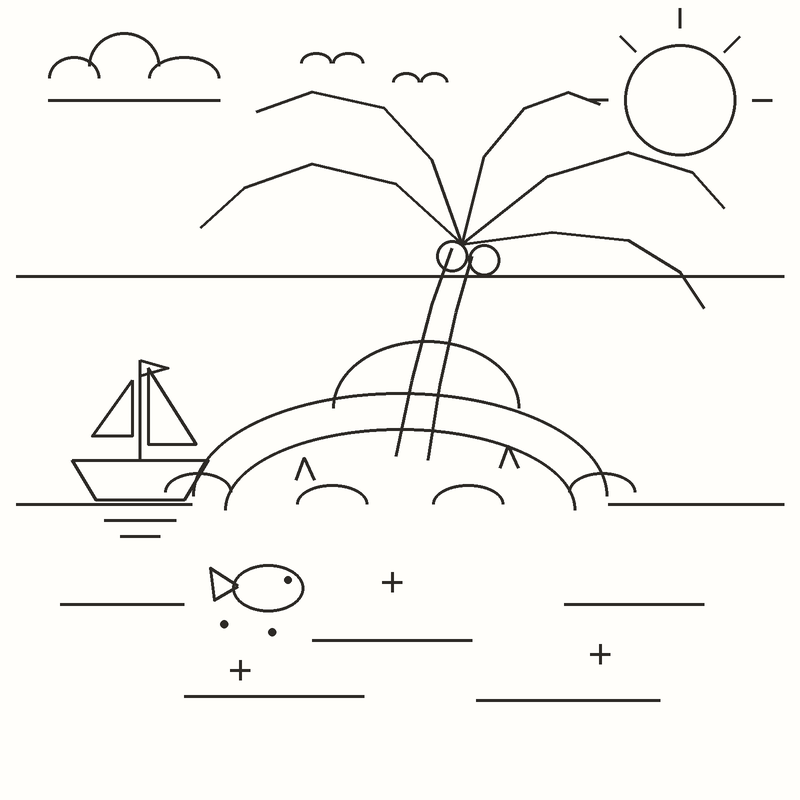
The 7 steps
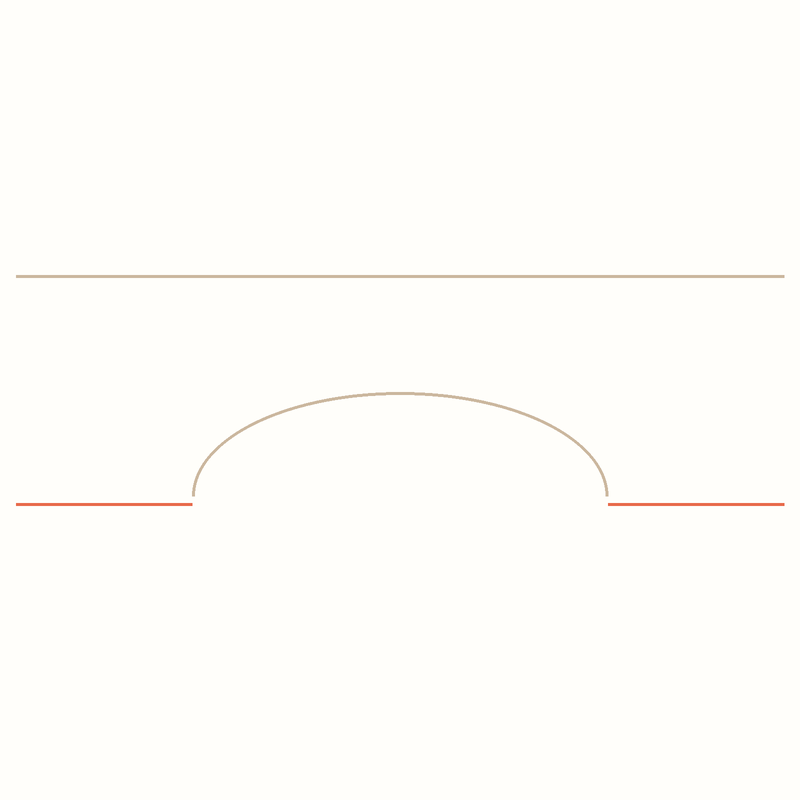
Draw the horizon, then raise the island: a smooth dome breaking the surface in the middle of the sea.
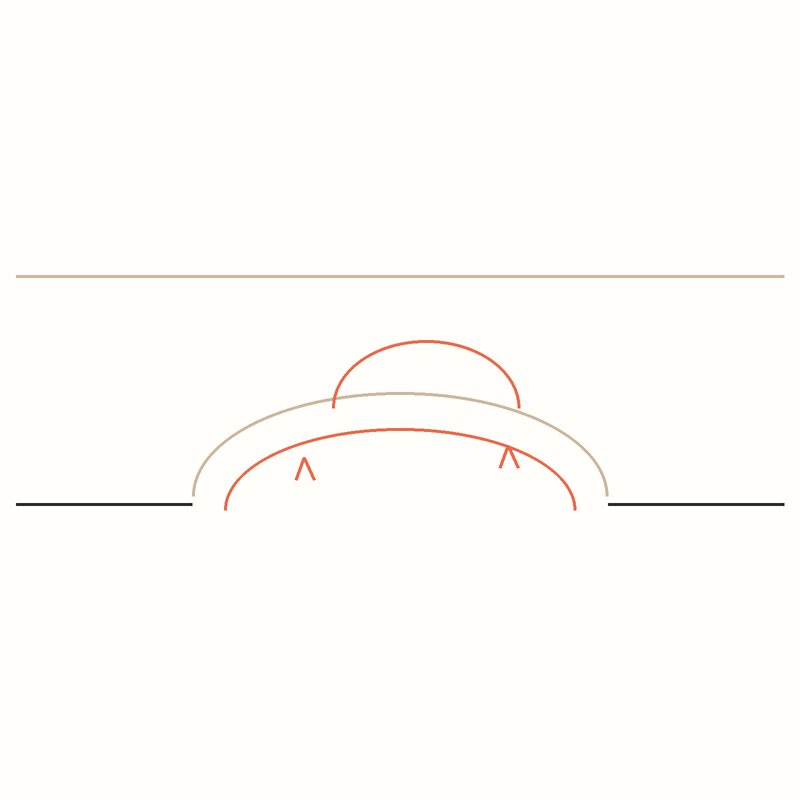
Wrap a beach band around the dome, bump a grassy hill on top, and sprout grass tufts along the crest.
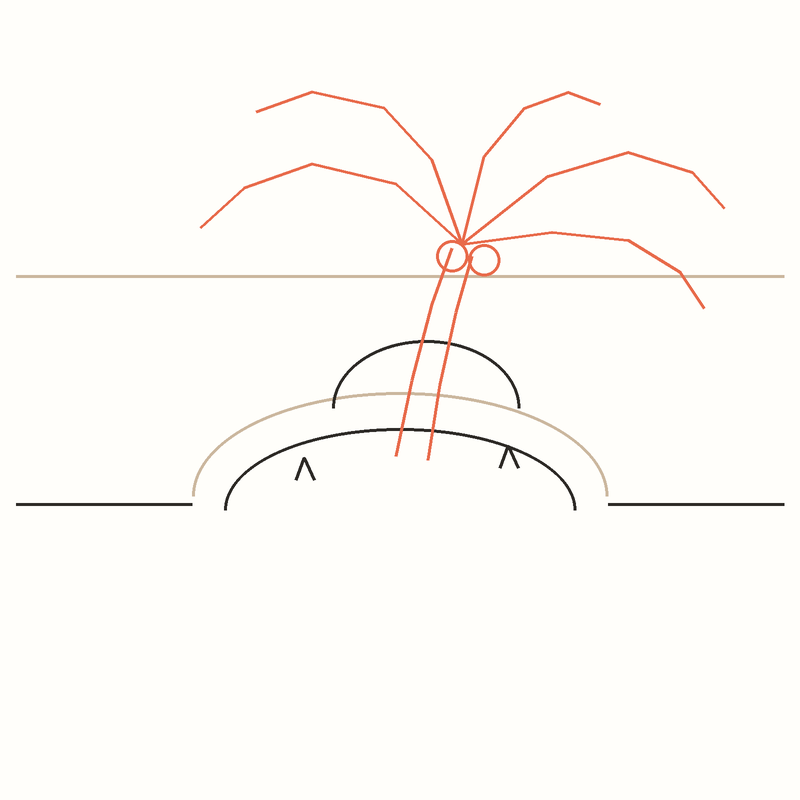
Grow the palm from the hill — a curving trunk lifting the crown above the horizon, five fronds bursting out, and two coconuts tucked beneath.
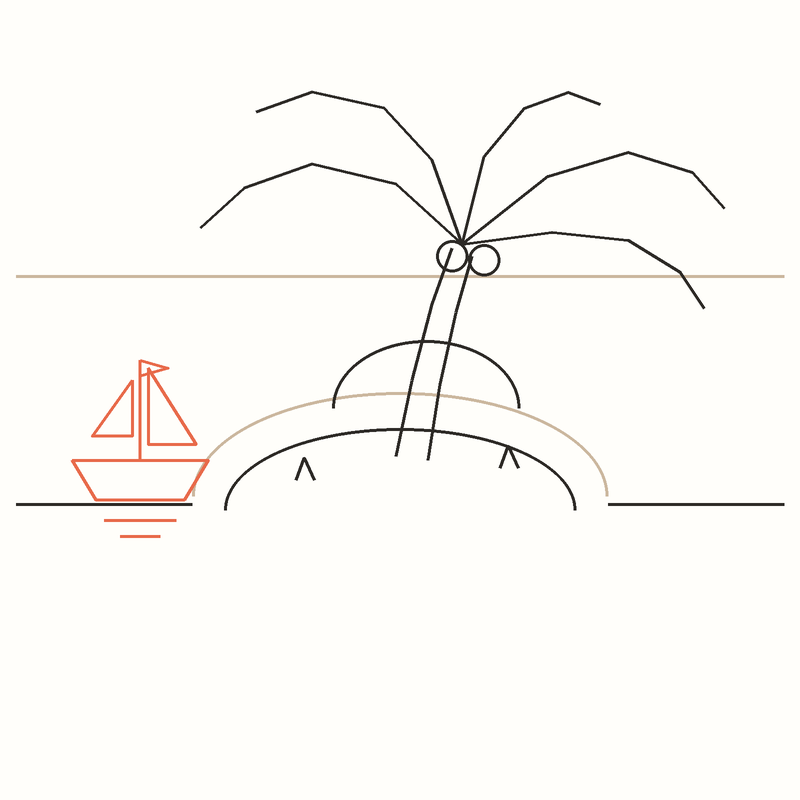
Sail a little boat in on the left: a hull, a mast, two triangle sails, and a flag, with reflection dashes below.
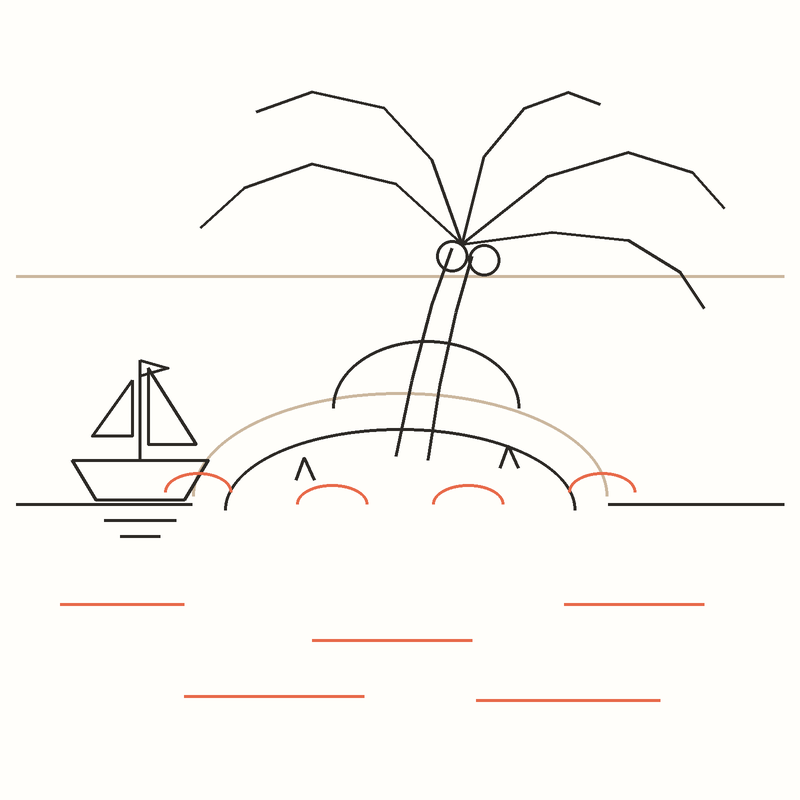
Lap foam bumps around the island's waterline and scatter calm wave lines across the open sea.
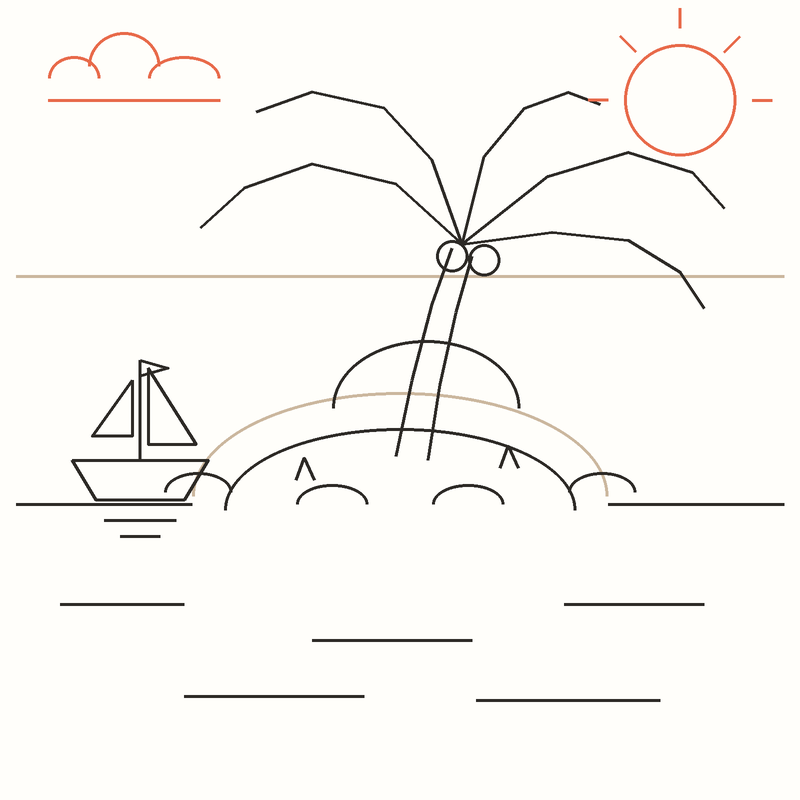
Add the sun with its rays in the top-right and a puffy cloud drifting on the left.
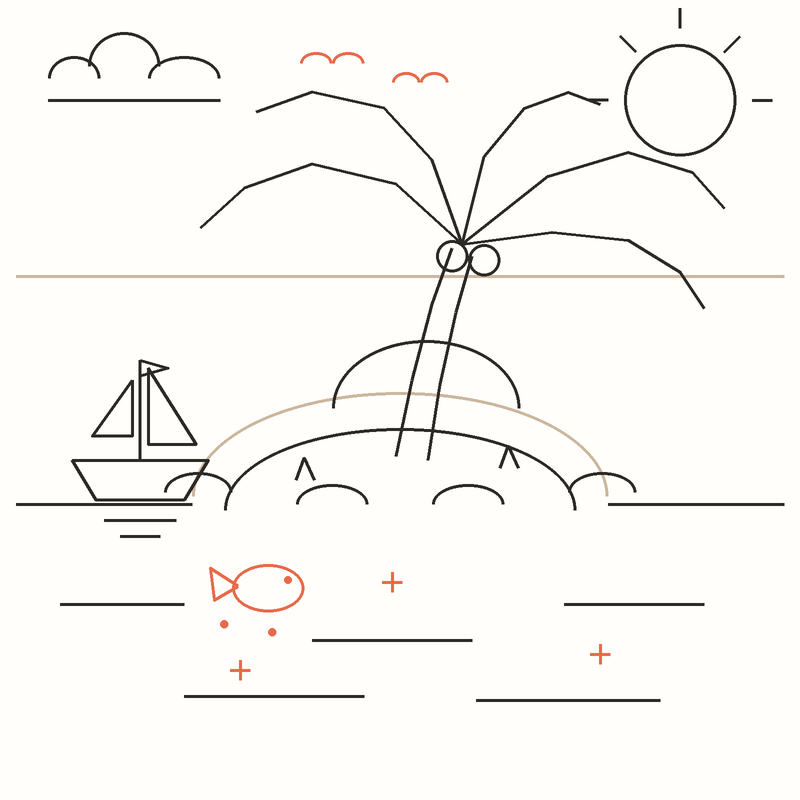
Finish with two birds, a fish leaping beside the island, and sparkles dancing on the water. Boss level complete!
Coach tips for this lesson
Before you call it done, run these three checks — they're the same ones the app asks in its Coach Check:
- Does the island dome sit ON the waterline, half in and half out of the sea?
- Does the boat float on the water, with its hull touching a wave line?
- Does the scene balance — island centre, boat and sun in opposite corners?
An island is a hill whose feet are underwater: the dome's ends should dive BELOW the sea line and be hidden by it, with foam bumps lapping at the join. If the dome sits on top of the line like a hat on a table, extend its ends down past the waterline and let the foam break the outline.
Boats rest IN water, not on it like a shelf. The hull's bottom should sit just below a wave line, with short reflection dashes underneath to anchor it. A hull hovering above the line — or a mast that doesn't reach the hull — breaks the spell instantly. Check the flag, sails and mast all connect back to the hull.
A rich scene still needs a centre of gravity: the island owns the middle, and the secondary players (boat, sun, cloud) spread to opposite sides so the eye travels around the whole picture. If everything crowds one side, the other half feels empty. Before the final details, squint and check the four corners — each should hold something small.
Finish this lesson in the app
In the free Draw.guru app you can trace this lesson on screen for an instant score, or photograph your paper drawing and overlay it on the reference with Smart Compare. Join the waitlist for launch.
One launch email, that's it. No spam, unsubscribe any time.