Home · Lessons · Nature & Landscapes
How to Draw a Snowy Village
A free step-by-step lesson in 7 steps — about 18 minutes with just a pencil, an eraser and paper. Draw the light shapes first; they get erased at the end.
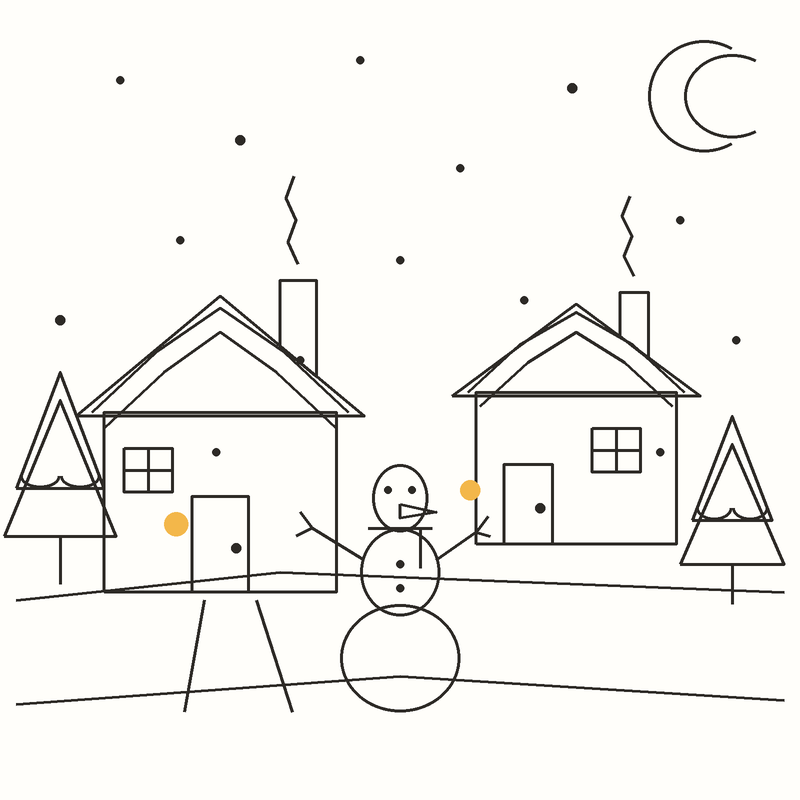
The 7 steps
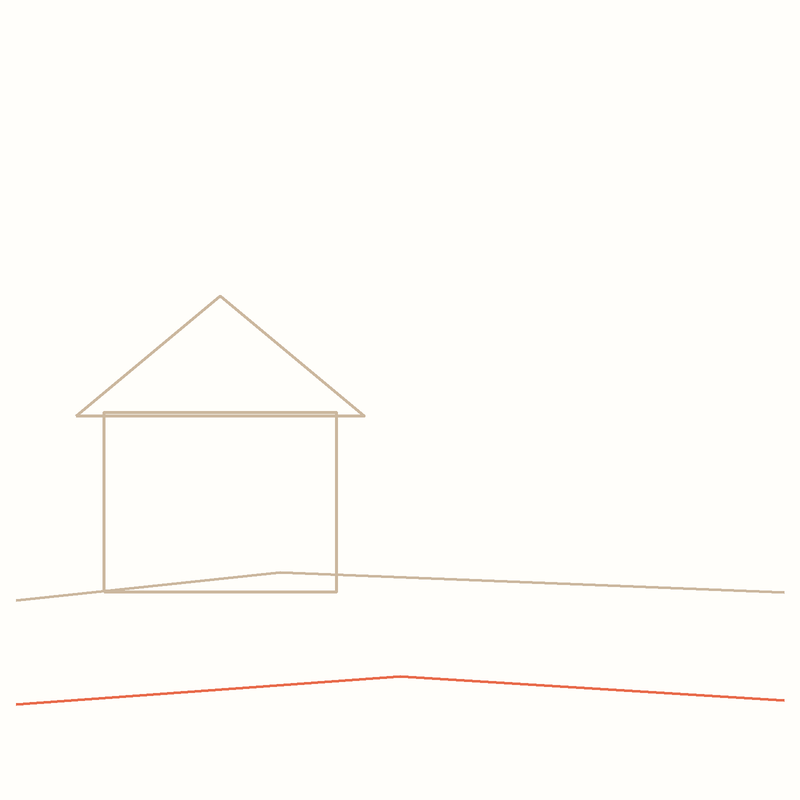
Lay down soft snowdrifts, then build the big house in front: a square body and a steep triangle roof.
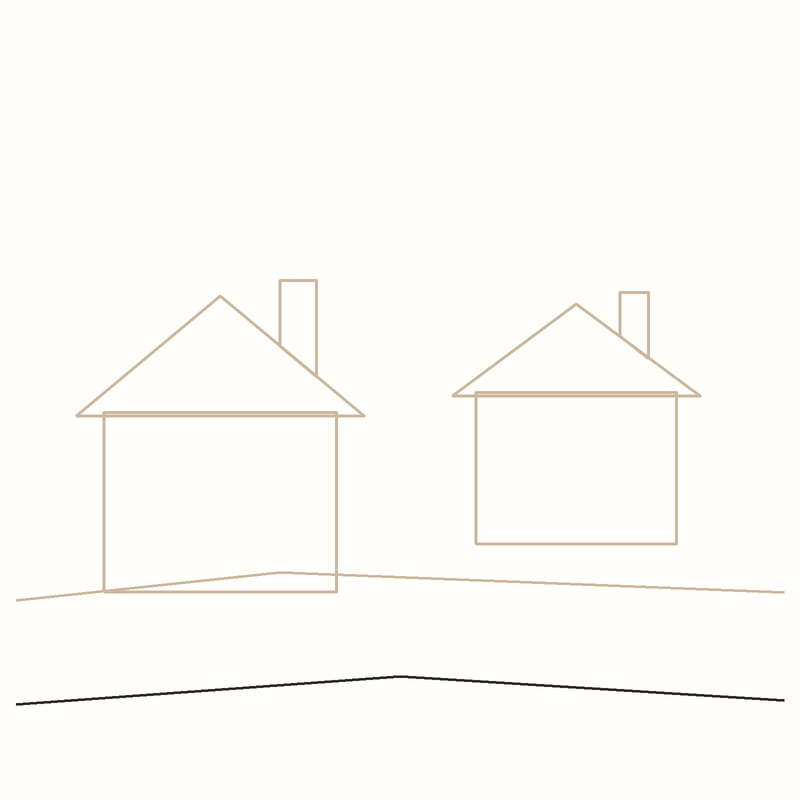
Add the second house, smaller and a little higher — it's farther away. Give both houses chimneys.
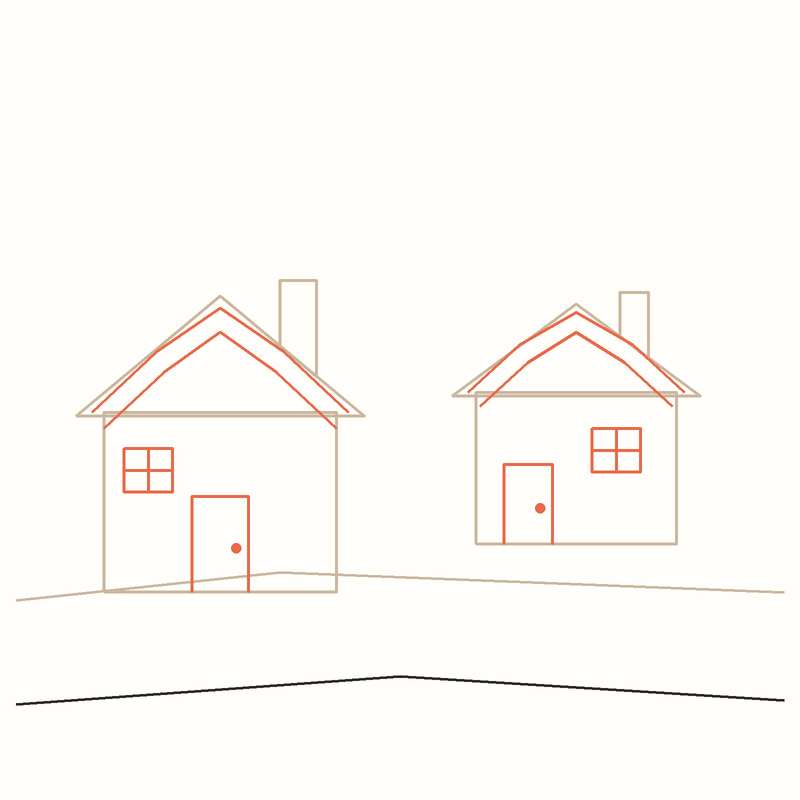
Blanket both roofs with snow: a wavy band following each roofline. Then doors with dot handles and cross-paned windows.
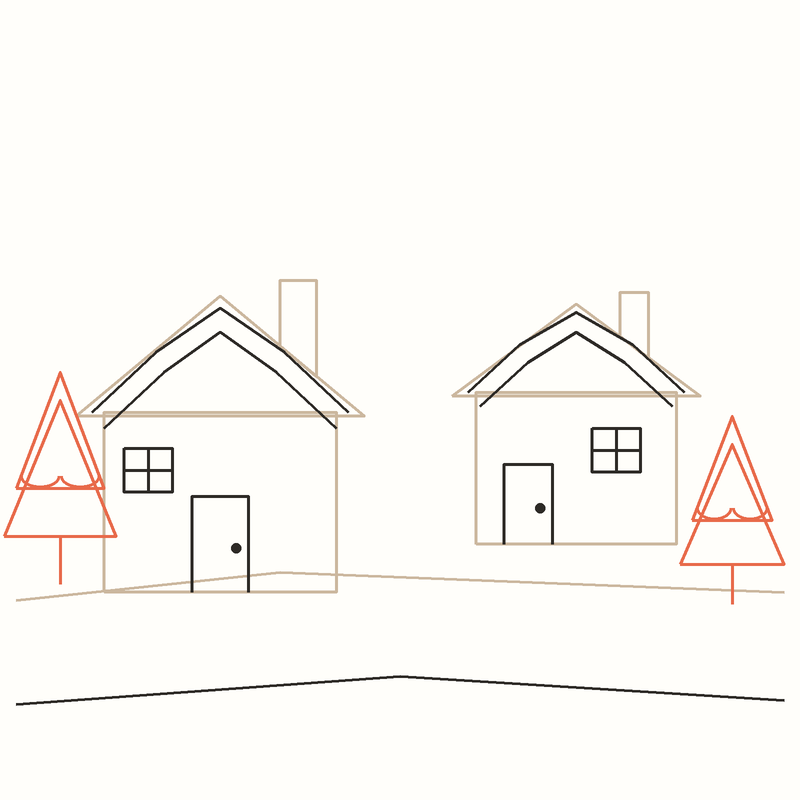
Grow snowy pines at the edges of the village — stacked triangles with little snow arcs resting on the branches.
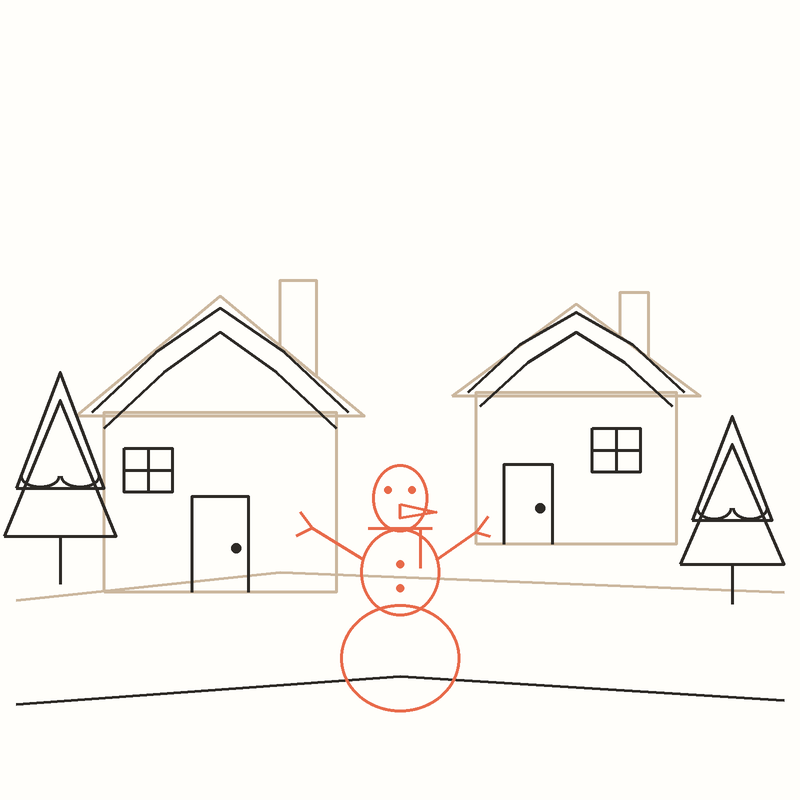
Build a snowman between the houses: three circles shrinking as they stack, a carrot nose, twig arms, and a scarf.
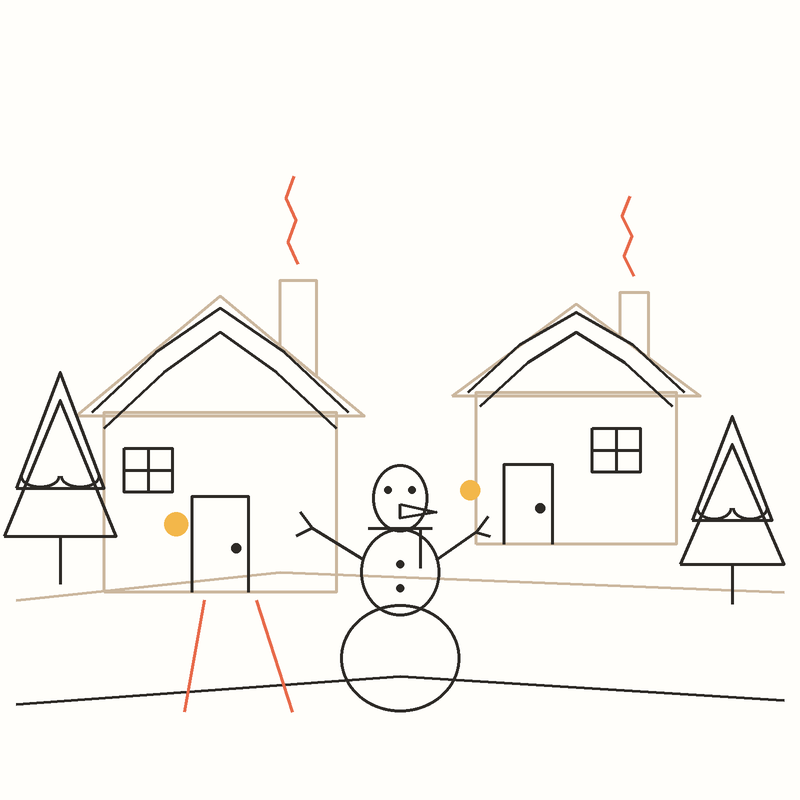
Curl smoke from both chimneys, sweep a path through the snow to the big door, and light warm lanterns beside the doors.
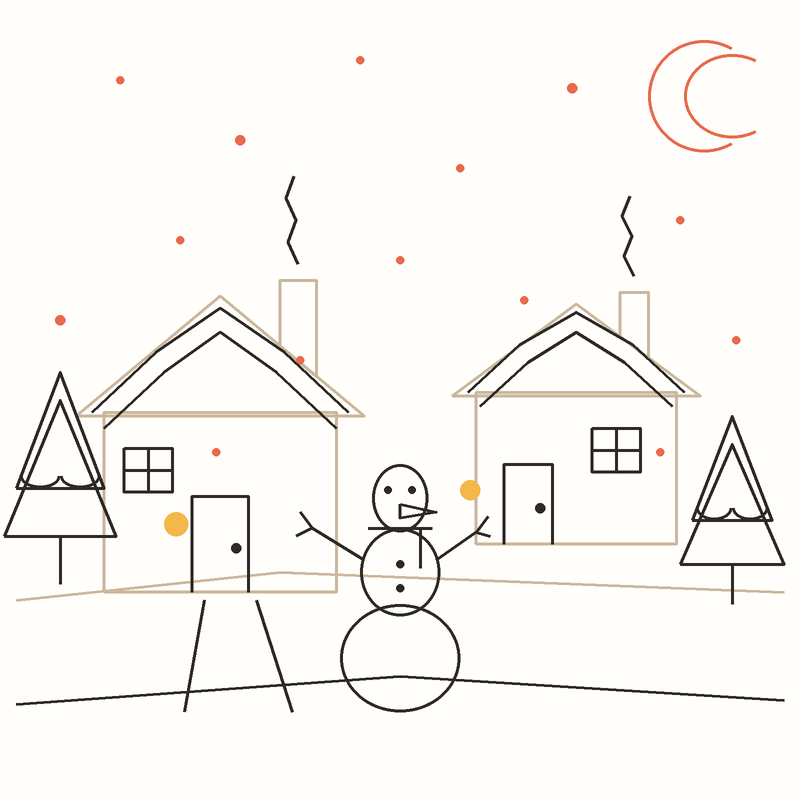
Let the snow fall — dots drifting over the whole scene — and hang a crescent moon in the night sky.
Coach tips for this lesson
Before you call it done, run these three checks — they're the same ones the app asks in its Coach Check:
- Do the snow caps follow the roofline like a blanket?
- Do the snowman's circles shrink steadily from bottom to top?
- Is the far house clearly smaller and higher than the near one?
Snow lies ON the roof, so the cap is a band of even thickness that follows the roof's slope exactly — same angle, a little below the peak line, with a wavy bottom edge where the snow is melting. If the band is thicker at one end, or its angle differs from the roof, it reads as a second roof floating. Draw the roof first, then trace its slope twice.
A snowman is three snowballs in a pyramid of size: the base is widest, the middle about two-thirds of it, the head about half. If the middle is as wide as the base he looks like a snow pillar; if the head is too big he topples. Let each circle overlap the one below slightly so they melt together instead of balancing like stones.
The second house is farther away, and two cues prove it: it's smaller overall, and its ground line sits HIGHER on the page (distance lifts things toward the horizon). If both houses are the same size on the same line, the village is a flat row. Shrink the far house to about three-quarters and raise its base above the near house's base.
Finish this lesson in the app
In the free Draw.guru app you can trace this lesson on screen for an instant score, or photograph your paper drawing and overlay it on the reference with Smart Compare. Join the waitlist for launch.
One launch email, that's it. No spam, unsubscribe any time.